Happy National Metric Week

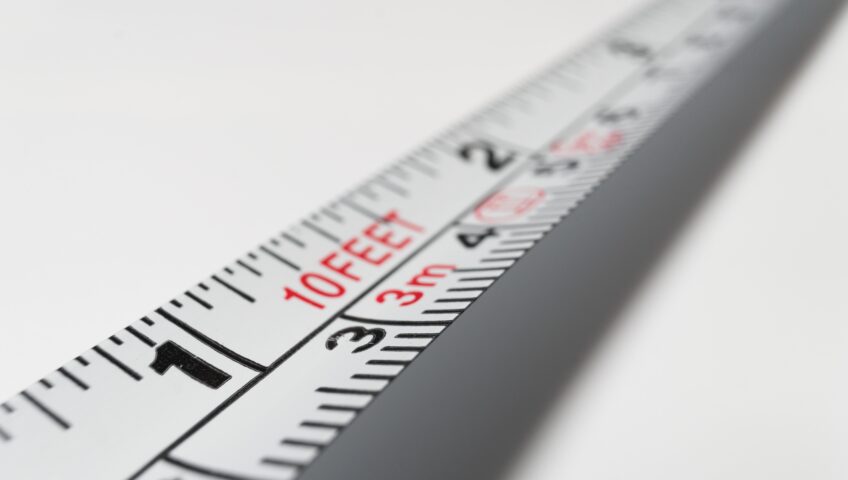
Did you know that the metric system began during the Age of Enlightenment?

In Europe, the metric system became the normal standard measurement and later was adopted across the world with the exception of the United States (US), Liberia, and Myanmar. Today, the US remains the only country to use the imperial system. The US didn’t adopt the metric system because, during the Industrial Revolution, the main source of income was manufacturing plants; adopting the metric system would have cost the US time and money. Even in today’s society, money is the main topic of discussion as to why the US won’t change to the metric system. Although the metric system is not used in the US, it plays a major part in the US engineering industry, which utilizes the metric system due to its compatibility with all types of measurements and accuracy over the imperial system. For example, engineers utilize the metric system when creating computer-aided design (CAD).

Many considered Gabriel Mouton, a French abbot and scientist, to be the father of the metric system. Mouton was born in 1618 in Lyon, France, he spent his whole life and later died in 1694. Mouton was incredibly involved with his church, but also spent his personal time studying mathematics and astronomy. In the field of natural and practical measurement, Mouton was a pioneer; he started by examining how latitude affects a pendulum's length with a one beat per second frequency. The length of the terrestrial meridian, which was to be used as the universal unit of length, was the length that he then proposed to infer from these changes.

The metric system has many advantages, but is not without its disadvantages. Some advantages consist of the metric system being consistently based on decimal numbers; since it’s based on multiples of ten, you can simply move the decimal point so any measurements that are given in one metric unit such as a kilogram can be converted to another metric unit such as a gram. In addition, the metric system works well with percentages and is a one sort of unit for weight, which makes it easier to get more accurate measurements. However, the disadvantage of the metric system is that it’s not well suited for working with fractions, so basically one size does not fit all. When it comes to measuring fractions, the numbers can be off. For example, 2/6 meter is approximately equivalent to 333 millimeters and 2/3 kilogram is approximately equal to 666 grams.



 

What is Artificial Intelligence and Machine Learning?

Artificial intelligence (AI) and machine learning (ML) are the two interconnected digital technologies that have been transforming engineering designs side by side. According to Britannica, AI is defined as “the ability of a digital computer or computer-controlled robot to perform tasks commonly associated with intelligent beings.” While ML is defined by IBM.com as “a branch of AI and computer science which focuses on the use of data and algorithms to imitate the way that humans learn, gradually improving its accuracy.”

In 1964, John McCarthy, a professor at Stanford University teaching computer science, coined the term AI. AI is designed to simulate human intelligence based on behaviors such as reflexivity, memory, theory of mind, and self-awareness. These behaviors are controlled by triggers and commands and can be simulated. ML was created to assist software programs in making more accurate predictions from historical data. Reinforcement learning, supervised learning, and unsupervised learning are the three types of ML algorithms.

Some examples of digital technologies that use AI and ML in our daily lives include text editors, autocorrect, maps, and navigation systems. Additionally, because it enables more accurate engineering designs, AI and ML have developed into crucial identifying tools. Engineers can adapt each design using the software to the demands and preferences of the client. Also, the software can handle minor issues by itself, freeing up engineers to work on more difficult issues.

Due to their ability to speed up and boost the efficiency of work, AI and ML software will continue being the present and future of engineering designs.


Water System Modernization Project

This project’s goal was to provide a supervisory control and data acquisition system (SCADA) to monitor all of the facilities that serve the Wallkill Consolidated Water District, which will allow for faster emergency response times and remote monitoring of critical system processes.

The scope of this project and the interdependence of the facilities in the Wallkill Consolidated Water District required close attention to the order in which the work was performed. The first hurdle was to begin the project quickly enough to properly evaluate the communication viability, before the tree cover was lost. Next, it was critical that the facilities not be taken offline during the construction process, which demanded that both the general and electrical contractors maintain close communication with each other, KC, and the Wallkill water operators. By maintaining a strict order of tasks, water service interruption was avoided.

KC managed the construction process for this project, including the bid and submittal processes, shop drawing review, construction inspection, and supervision of additional inspectors. KC also worked extensively on documenting the project progress, which included as-built plans, and creating a detailed map and description of the Town of Wallkill’s newly modernized consolidated water district.

Happy National Aviation Day

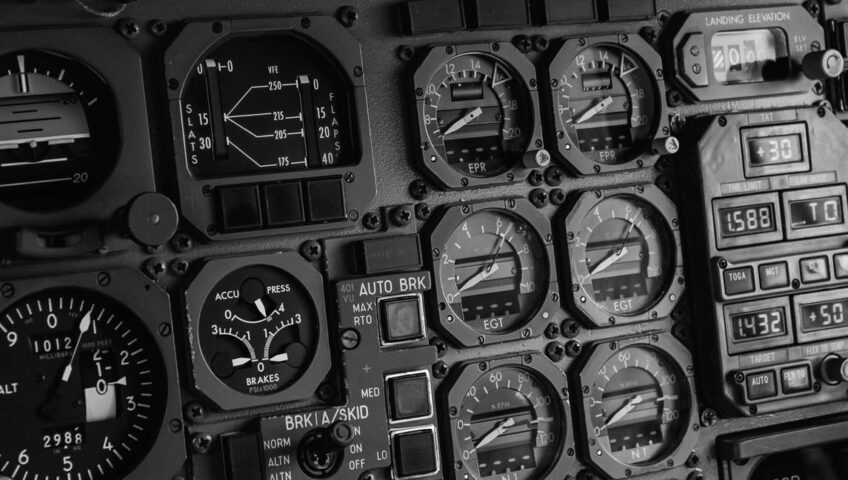
From the French word “aviation” (which comes from the Laten stem, “Avis,” meaning bird), aviation is the act of flying or operating an aircraft. This concept, particularly human aviation, had been a point of interest in engineering for a long time, and on December 17th, 1903, the collective efforts and ideas of previous great minds resulted in one hugely significant event for aeronautical engineering; Orville Wright became the first ever person to fly a heavier-than-air flying machine, traveling about 850 feet while his brother Wilbur was at the controls. The aircraft had been designed and built by the brothers, making them the first-ever aeronautical engineers and test pilots. National Aviation Day is celebrated on August 19th, Orville Wright’s birthday, in recognition of pioneers of human flight and all developments humans have made thereafter that allowed aviation to be such massive part of today’s world.

The design for a modern airplane was first described before the Wright brothers were even born by George Cayley in 1799, who described a machine with fixed wings that used lift propulsion and control mechanisms; many other advancements in engineering gave the Wright brothers the tools to achieve this feat. Even still, the Wright brothers’ accomplishment cannot be diminished; they studied lift, calculated the wing area needed to allow the machine to fly, designed and built an aluminum engine capable of producing the required power per unit weight, used their understanding of lift to make calculations and estimates for propellers, and even funded the entire project out of their own pockets.

Present day, human flight is so commonplace that it is rarely even considered just how amazing the feat is and how impactful developments in aeronautical engineering have been for humanity. National Aviation Day is the perfect time to recognize this amazing innovation and appreciate how aeronautical engineering has made the world more accessible by providing speedy travel to places that would have otherwise been completely inaccessible to most people.


Happy National Professional Engineers Day

A Professional Engineer (P.E.) license is a certification given to engineers after passing an examination provided by the National Council of Examiners for Engineers and Surveyors (NCEES). In order to obtain a P.E. license, engineers must meet NCEES requirements of passing the Fundamentals of Engineering (FE) exam and the Principles and Practice of Engineering (PE) exam. Engineers can have multiple P.E. licenses because they are provided individually by states. The first person to ever earn a P.E. license in the United States (U.S.) was Charles Bellamy on August 8th, 1907; now over 100 years later, we celebrate Professional Engineers Day around the world.

Wednesday, August 3rd, 2022 will mark the seventh annual anniversary of Professional Engineers Day. The purpose of this holiday is to bring awareness to what engineers do, what it takes to be a P.E., and how they stay up-to-date with rapidly growing technologies. Thanks to the awareness this holiday offers, the U.S. has more than 800,000 engineers with P.E. licenses according to NCEES, and soon we will be able to proudly say the U.S. has more than 1,000,000 engineers with P.E. licenses.

Happy Professional Engineers Day!