What are foundations in engineering?

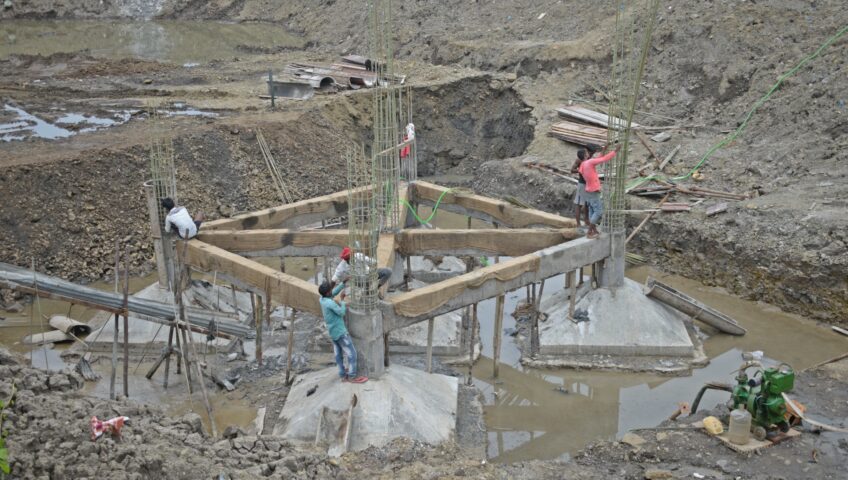
A foundation is defined by The Britannica Dictionary as “a usually stone or concrete structure that supports a building from underneath.” In engineering, the foundation can be thought of as the point where the superstructure meets the soil beneath it. Foundations distribute the weights coming from the structure itself to the earth through the connection of the structure to the soil. In special occasions, the connection of the structure can also be to water, known as “floating structures.” Any structure, other than a boat, with a foundation flotation mechanism that enables it to float on water is referred to as a “floating structure.” An example of a floating structure is the newly constructed public park called Little Island, which rises about 200 feet out of the water.

In general, foundations are categorized as shallow or deep. It is generally understood that shallow foundations are constructed close to the earth's surface. Shallow foundations are excellent for buildings that are less than six feet deep, or "transfer loads at a shallow depth," while deep foundations are positioned farther below the surface of the ground and disperse structural loads deep into the earth. Deep foundations are frequently utilized when constructing superstructures like skyscrapers, housing complexes, or shopping malls because they enable a more stable foundation.

Shallow and deep foundations have differences and cannot be compared to each other because both foundations serve different purposes. When selecting a type of foundation, it all depends on the type of project, so it is best to always consult with a professional with engineering experience. A professional will choose the best course of action based on the project.

 

Preventing Incidents in Construction Sites

Occupational Safety and Health Administration’s (OSHA's) top 10 most frequently cited violations in 2021, according to the US Department of Labor, are “Duty to Have Fall Protection” (1926.501), “Respiratory Protection” (1910.134), “Ladders” (1926.1053), “Hazard Communication” (1910.1200), “General Requirements for Scaffolds” (1926.451), "Training Requirements for Fall Protection” (1926.503), “Control of Hazardous Energy (Lockout / Tagout)” (1910.147), “Eye and Face Protection” (1926.102), “Powered Industrial Trucks” (1910.178), and “General Requirements for All Machines” (1910.212). These violations can cause fatal risks and/or injuries for workers, and this is why it’s so important to train workers in all the safety rules and regulations.

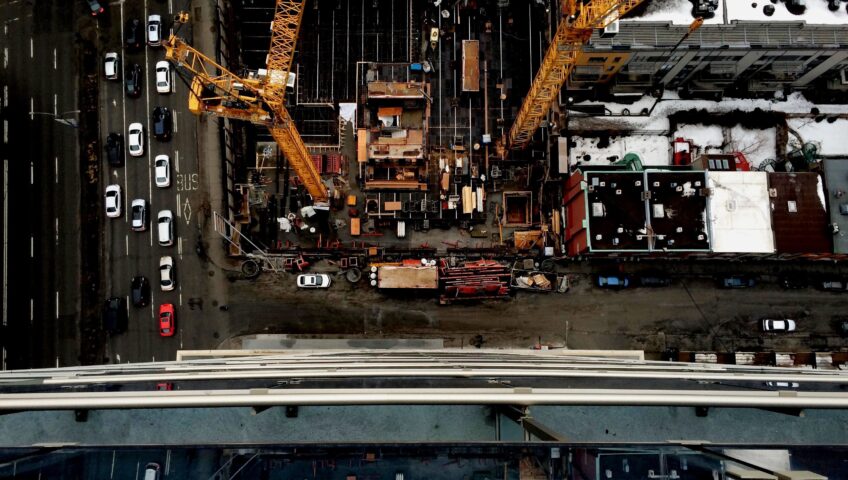
A safety plan must be developed for each project the construction team undertakes, and all workers must receive training on it prior to starting the job in order to follow all safety procedures, including recurrent education courses. Due to the dangers that can arise in the construction industry, safety precautions are implemented to safeguard the lives of the workers. Most accidents can be avoided if all site safety rules are followed and carried out properly. In addition, keeping the equipment in good condition helps prevent costly repairs as well as harm to nearby operators or ground personnel. Therefore, prioritizing equipment maintenance should be crucial due to the ability to severely reduce accidents on the work site. In the long run, regular equipment maintenance will save companies thousands of dollars because keeping up with the equipment will be a lot cheaper than repairing it or needing to buy brand-new equipment. Although there are numerous variables that affect the average lifespan of construction equipment, including the type of equipment, the environment they are being used in, and how the equipment is being operated, maintenance is an important element to the safety of the jobsite.

Working together to deliver quality work and safety for everyone will always be a priority. Always refer to your safety plan and follow all procedures to keep yourself and others safe.


Survey Drones

Did you know that unmanned aerial vehicles (UAVs) or unmanned aircraft systems are the more formally known names for drones?

The invention of the first UAV could be traced back to 1783, when the first pilotless hot-air balloon was created, and that is because any powered aerial vehicle without a human operator aboard is considered a drone. Therefore, from a technical standpoint, drones have been around for decades, but modern drones started to be developed in the 1900s. As technology evolves, innovators have been improving the quality of drones, which allows a variety of industries to use them to improve their quality of work. Due to their capacity to quickly cover vast surface areas and provide access to difficult places, modern drones have gained a lot of popularity.

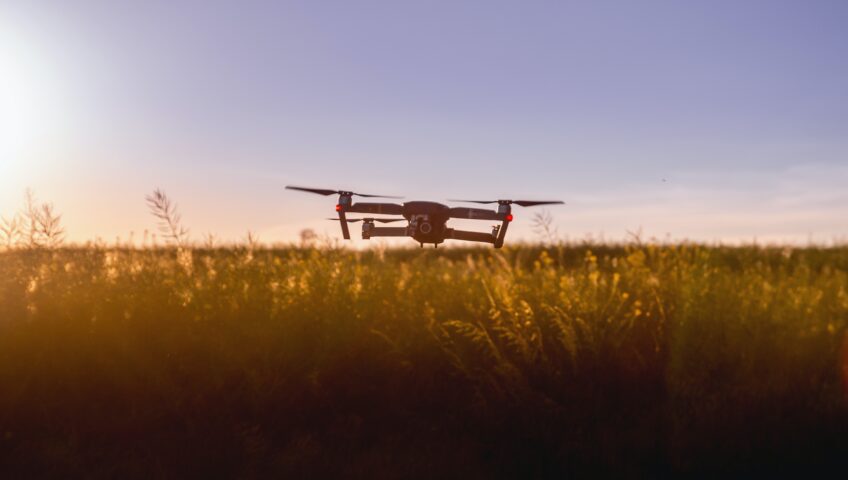
The exponential growth of technological innovation is causing rapid changes in the field of professional land surveying, and one of the new developments in land surveying technology is the use of drones. Survey drones have become essential tools because they allow surveyors to get their data quickly and accurately, which expands their services and helps reduce costs. Survey drones can be used for mapping and surveying due to their ability to fly over the ground and successfully carry out tasks for land surveys, 3D mapping, and topographic and photogrammetry surveys on large plots of land.

Surveyors must adhere to legal requirements and basic operating procedures, even as survey drone technology becomes more adaptable and accessible to users. Because of its influence, strong laws are implemented to preserve a secure environment.


International Women in Engineering Day

Next Friday, June 23rd, will mark the 7th International Women in Engineering Day (INWED). Initially, popularity and enthusiasm for the day expanded the celebration from its concentrated origin in the United Kingdom to become a worldwide event.

Originally launched in 2014 by the Women’s Engineering Society (WES), INWED sought to recognize and celebrate the presence and importance of women in engineering. INWED’s website calls the day “an accessible and inspiring way for companies, institutions, organizations, schools, universities, and individuals to raise the profile of women in Science, Technology, Engineering, and Math (STEM) and related sectors, showcase a commitment to diversity, and inspire future generations by organizing their own events and activities.”
WES’ own mission to be active supporters of women, collaborators with government agencies and policy makers, and challengers of stagnant cultures merges into the yearly celebration of INWED.

This year’s theme, #Inventors&Innovators, will focus on highlighting the work women engineers around the world are doing to build a better future. INWED will focus on encouraging all supporting groups to organize events in support of INWED. Some examples on how to get involved, according to the campaign website, include becoming a STEM ambassador; hosting a networking, mentoring, careers, or social event; signing up to their newsletter and following their social media accounts, such as Twitter and Instagram at @INWEB1919, and joining WES as a corporate partner; and / or promoting this year’s theme with the #Inventors&Innovators and #INWEB23 hashtags.

For more information about INWED and how you or your organization can participate, visit www.inwed.org.uk.


Infrastructure Week, Day 5: Roads

In the U.S., roads are an unavoidable part of our everyday lives. We use roadways daily to travel to and from work, school, social engagements, and more. So how do we deal with the issue of America’s crumbling roadway infrastructure?

As the years go by, American metropolitan areas are stymied by traffic congestion.

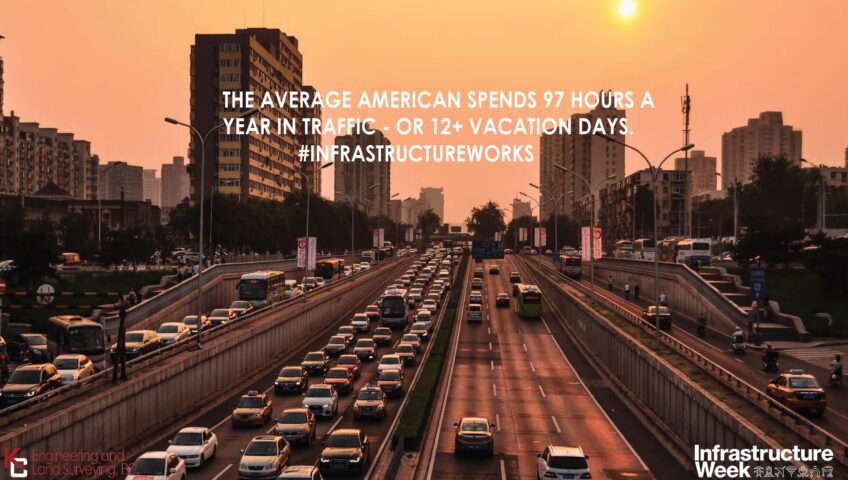
The average American spends 97 hours a year stuck in traffic. That’s 12+ vacations days! Meanwhile, suburban and more rural areas are forced to contend with deteriorating road conditions, as well as outdated and dangerous traffic configurations.

At KC Engineering and Land Surveying, P.C. (KC), maintaining and upgrading our roads remains an important priority. Our civil engineers are skilled in parking lot and roadway design, and along with our traffic engineers they can effectively and efficiently plan, design, and oversee the construction of intersection improvements, parking facilities, maintenance and protection of traffic plans, highways, utility relocations, site lighting, driveways and other roadways, curbs, and sidewalks so that the outcomes not only provide for smooth transitions but also for economically functional results.

With projects like Cross Westchester Expressway (I-287) Exit 8E Reconstruction, 5th Avenue Reconstruction, DeLavergne Avenue Reconstruction, and Milling and Resurfacing of Federal Aid Roads, KC strives to maintain the safety and commutability of area roads, because at KC we recognize the vital importance of roadway infrastructure.