
Women in Engineering Programs

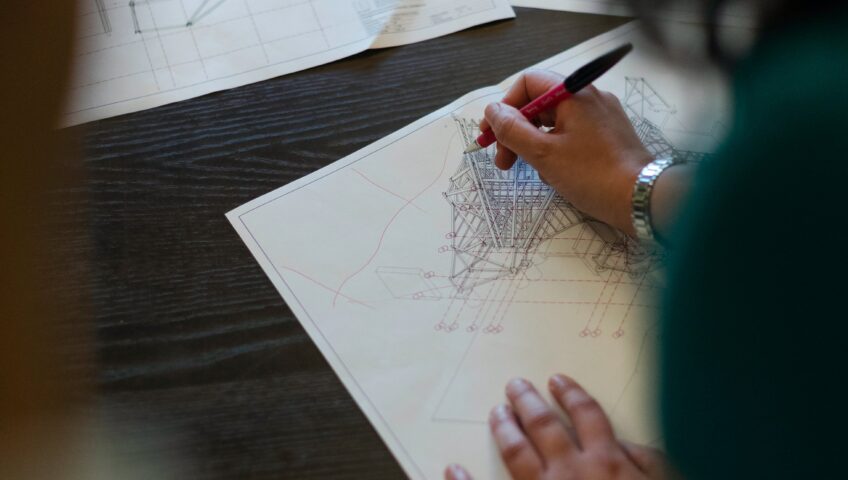
With a higher percentage of degree holders than males, women have surpassed men in obtaining the top rank for more than 20 years. However, research revealed that women continue to be underrepresented in engineering degrees, even in today's culture. According to Census.gov, "despite making up nearly half of the U.S. workforce, women are still vastly underrepresented in the science, technology, engineering and math (STEM) workforce. Women made gains – from 8% of STEM workers in 1970 to 27% in 2019 – but men still dominated the field. Men made up 52% of all U.S. workers but 73% of all STEM workers.” Unfortunately, persistent gender stereotypes can discourage women from pursuing engineering professions. Most women who avoid going down the engineering career path do so because they think it will be difficult for them to have a flexible schedule and because they think they will always work extremely long hours weekly. These misconceptions may discourage women from pursuing engineering if they envision starting a family in the near future. However, the truth is that a lot of women who work in the engineering field manage to reconcile their personal and professional lives. There should be more women in the engineering field, no doubt. And in order to continue to grow the percentage of women in the engineering field, we first must eliminate the stereotype that women won’t succeed in engineering. In addition, it is important to shift the gender balance in the workplace, where women need to be given more opportunity to provide their distinctive views, concepts, and expertise.  A diversified workforce, regardless of gender or ethnicity, stimulates the development of fresh ideas since each person has a distinct style of thinking. Therefore, it is important to continue encouraging and finding different ways to diversify the workforce for a better future.


 

What is the Role of GIS in Civil Engineering?

Did you know that the geographic information system (GIS) started as a concept in the 1960s?

GIS may have begun as a concept, but thanks to its incredible scientific development, it has evolved into a modern invention. A GIS is a computer program with multiple pieces of software that collect, stores, verify, and present information about locations on the exterior of the Earth. This multi-purpose tool can gather a lot of material data as well as dated information about an area and visualize it to later be used to successfully complete civil engineering projects. This tool gives engineers the advantage of collecting and analyzing geographic data that can later be presented as 3D models. Another advantage of GIS is the ability to identify possible obstacles and opportunities between various sites. What sets GIS apart from any other computer program is its ability to link spatial data with geographic data concerning any element on the map.

GIS tools and software play an extremely important role in civil engineering, especially when considering geographical projects. The most used GIS tools and software in civil engineering consist of AutoCAD Map 3D, which has all of the common CAD capabilities that are available; ArcGIS, which offers a geo-based analytical feature for data; and Blue Marble Geographic, which provides an extensive variety of layout options for data to be imported and exported. Because of its creative solutions, GIS software is being used in the civil engineering industry at a rate that is growing quickly. With the constant changes in our infrastructure generated by the environmental crisis and economic and social factors, GIS enables engineers to identify the best areas for potential future expansion.

Given the variety of tools and software that GIS provides to help engineers effectively and successfully manage any project, it is safe to predict that GIS will continue to play a big part in the civil engineering industry.


What Is Total Station Used For?

Total Station technology was first introduced in the 1900s; however, the first official Total Station tool was created in 1968 by a German company called Carl Zeiss Inc., and during that time, Zeiss called this tool the “electronic tacheometer.” It wasn't until Hewlett-Packard launched a tool that provided similar results, but with the name "Total Station," over thirty years after the electronic tacheometer was created that it adopted its current name.

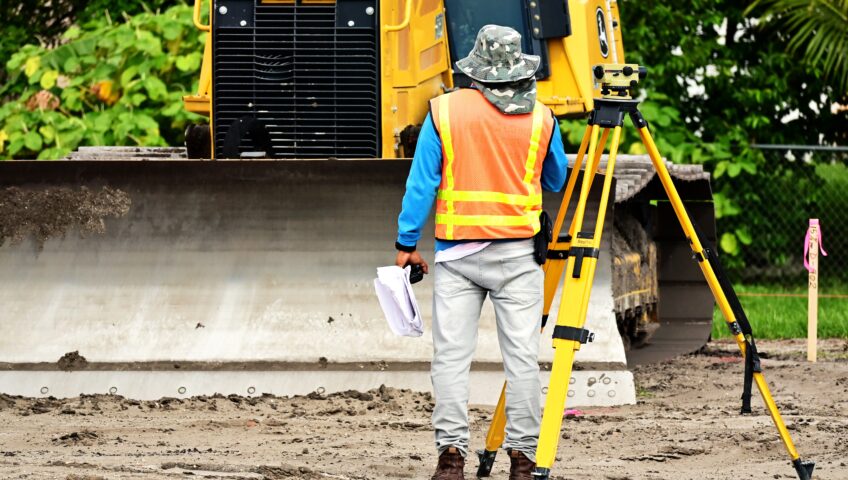
Total Station is an electronic distance measuring device (EDM) that is utilized by land surveyors and civil engineers while performing site surveys and construction work. The Total Station combines the ability to measure vertical and horizontal angles with electronic distances by combining a telescope, computer, and reflector. Total stations are tools that can be placed on the ground and use various sensors to calculate kilometers, angles, sectors, and altitudes, and find items. This is a great tool to use when needing to get the most accurate measurements on a project. After all the data is collected, it can be imported onto computers or laptops for the additional information to be processed.

Total Station has advantages and disadvantages, just like any other tool. The Total Station's measurement accuracy is an advantage, but the cost of the tool increases with increasing measurement accuracy in addition to its features, which can be a disadvantage for many companies. Therefore, buying a Total Station requires a significant investment of funds, so it is important to evaluate which model is best for the kind of work that your company does. Prism total stations, robotic total stations, autolock total stations, and total mechanical stationary are some of the different types of Total Stations. Furthermore, if funds are an issue, there are other tools that can offer an excellent alternative at a small fraction of the cost for projects that do not require precise measurement.


How is the flow of fluid significant in mechanical engineering?

Designing effective and high-performing mechanical systems requires an understanding of fluid flow, an essential element of mechanical engineering. The area of fluid mechanics, known as “fluid flow,” focuses solely on the properties and motion of fluid. We must also be aware of the numerous varieties of fluids when analyzing fluid mechanics: real fluid, ideal fluid, Newtonian fluid, non-Newtonian fluid, and ideal plastic fluid comprise some of the various kinds of fluids that have been recognized in the mechanical engineering industry.

The descriptions of these fluids are as follows:

  • Real fluids can be compressed and possess viscosity and surface tension. Some examples of real fluids are castor oil and petrol.
  • Ideal fluids are supposed to be both incompressible and viscous. Some examples of ideal fluids are water and air.
  • Newtonian fluids are ones whose viscosity is independent of the rate of stress. Some examples of Newtonian fluids are gasoline, water, and alcohol.
  • Non-Newtonian fluids have a variable viscosity that can become either more liquid or more solid when subjected to force. Toothpaste, butter, and soaps are examples of non-Newtonian fluids.
  • Ideal plastic fluids are referred to whenever a particular requirement is met, such as shear stress being equivalent to the gradient of velocity and also being greater than the yield rate. An example of an ideal plastic fluid is clay.

The flow of fluid has a significant impact on how quickly a product moves via a pipe, the duration it requires for it to settle or dry out, and how quickly the fluid gets distributed into packaging components. Therefore, fluid flow is necessary to make sure fluid control procedures are safe, effective, and affordable.


What is Software Engineering?

Did you know that software engineering is a branch of computer science?

All technology fields are built on the principles of computer science, which encompasses a wide variety of subfields, including artificial intelligence (AI), neural networks, technology for computing, and operating system development. As technology advances, we use computers in nearly all things we do. However, computing fosters creativity in all branches of the engineering field and offers solutions to a wide range of complex challenges that come with some projects’ scope of work.

Software engineering includes designing, improving, implementing, creating, testing, and maintaining complex computer programs. To create software solutions for end users, software engineers combine their expertise of programming languages with engineering principles. Some of the fundamental duties of a software engineer, also known as a software developer, include, but are not limited to, building and maintaining software systems, testing and assessing new software applications, and optimizing software. A software engineer must like problem-solving and possess good analytical abilities; as software engineering requires both strong communication skills and technical expertise, skill development is necessary.

All projects in civil engineering are completed using software. Therefore, every stage of a project, including drafting, recordkeeping, design, visualization, and assessment phases, involves the usage of software by engineers. Some of the top software used in civil engineering are:

  • AutoCAD Civil 3D: A civil engineering drafting software with a wide range of design, analysis, and simulation features, Civil 3D is unquestionably the most popular application in the sector.
  • MicroStation: A computer-aided design (CAD) software platform for two- and three-dimensional design and drafting. Architects, engineers, and construction professionals can use this software to make their vision a reality.
  • Microsoft Project: This is Microsoft’s project management tool, and it is intended to help a project manager create timetables, allocate personnel to assignments, monitor progress, control costs, and assess workloads.
  • Bluebeam: A multi-tool PDF editor called Bluebeam's Revu, or just Bluebeam, enables us to easily generate, change, and annotate PDF files.