National Static Electricity Day

Today, January 9th, is National Static Electricity Awareness Day!

The Library of Congress defines static electricity as "an imbalance between negative and positive charges in objects." Static electricity is completely harmless and can manifest itself in a variety of ways, such as rubbing a balloon against your clothes and sticking it to the walls or on your hair to cause it to raise.

The first recorded instance of static electricity was when Thales of Miletus, a Greek philosopher, recorded that he noticed that dust was sticking to his ambers after rubbing them; however, it wasn’t until many years later that the term “electricity” was established, and that’s when humanity began to pursue a greater understanding of the concept of static electricity. National Static Electricity Day is now observed because it has become an essential component of and has shaped our daily lives in numerous positive ways. Factory air pollution, for example, can be managed thanks to advances in static electricity and electric engineering.

A few interesting and fun facts about static electricity:

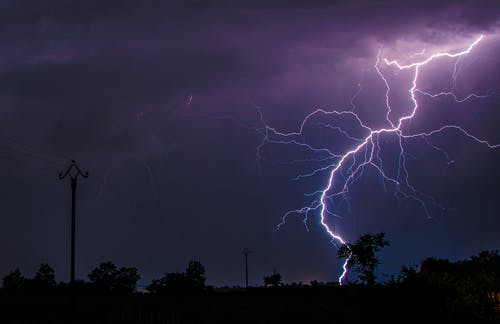
  • Lightning is actually a form of static electricity due to the electric charge exchange between clouds;
  • Static electricity could be harnessed as a future source of energy; and
  • Photocopy machines use static electricity to place ink on paper.

If you want to learn more about science and static electricity, please visit: https://www.sciencemadesimple.com/static.html

 

What is Additive Manufacturing?

Did you know that additive manufacturing (AM) makes physical objects from 3D digital designs? AM is defined by GE Additive as “data computer-aided-design (CAD) software or 3D object scanners to direct hardware to deposit material, layer upon layer, in precise geometric shapes.”

Digital technology has been revolutionizing the engineering industry for decades, and AM brings a new and improved angle that will expand the range of designs. AM is capable of producing shapes that were previously unattainable using only metal powder material and a laser machine. Instead of molding or even machining, the laser machine can recreate and build up the 3D printing layer by layer, including the detailed structures on the inside. AM is so practical that engineers are able to make last minute changes to the 3D printing without delaying or ruining the object. Additionally, a large section of the 3D printing can be made as a single large piece instead of printing multiple smaller parts and then assembling them together. It is safe to say that as the industries become more aware of what AM is capable of doing and AM becomes more popular within industries, it will have a bright future due to its capability of working so well side-by-side with other technology, including machining. AM can also be utilized in other industries such as aviation and medical because it is capable of printing aircraft parts and medical devices, including creation surgical implants.

To learn more about AM, please visit: GE Additive


Happy Computer Science Education Week

This year's Computer Science Education Week (CSEdWeek) will be held from December 5th to the 11th to continue inspiring students who have a passion for computer science while also piquing the interest of new students. The first CSWdWeek was created by the Association for Computing Machinery (AMC) in 2009 to raise awareness for and familiarize younger generations with the importance of computing in all careers.

CSWdWeek was inspired by the American computer scientist, United States Navy rear admiral, and mathematician Grace Brewster Murray Hopper. She worked on the development of many successful programs such as Harvard Mark I, which was an automatic protocomputer during World War II that could perform long computations. She was a visionary who succeeded in male-dominated fields and opened many doors for women. CSEdWeek month and days were selected in honor of Hopper’s birthday, December 9th, 1906.

As technology advances, most jobs require some level of understanding of computer science, so the primary goal of this program is to familiarize the younger population with programming and coding from an early age. Now, thanks to CSEdWeeks bringing awareness to computer science, there are multiple programs available for high schoolers and middle schoolers that give students the opportunity to participate in computer competitions. Students can compete in computer science categories such as coding, video game design, website design and/or webmaster, and software development. It’s proven that students involved in these types of competitions and programs from an early age can improve teamwork and communication skills as well as become more mature and focused, which is an advantage when choosing college majors or starting career paths.

If interested in more details on computer science competitions, please visit:

  • CyberPatriot National Youth Cyber Defense Program;
  • American Computer Science League;
  • USA Computing Olympiad (USACO); and
  • Technology Student Association (TSA).

Happy Computer Science Education Week!


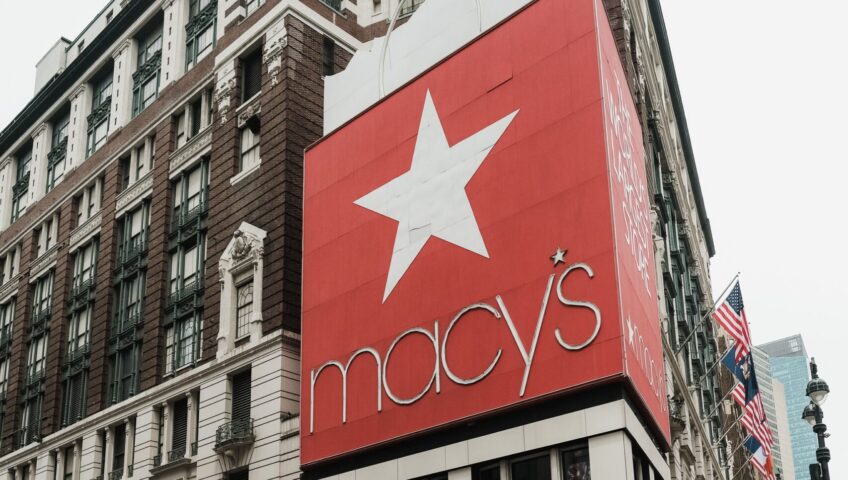
The Engineering Behind the Macy’s Thanksgiving Day Parade Balloons

November 24 is Thanksgiving, and while we will spend time around the dinner table next Thursday evening, many people will kick off the day by watching the Macy’s Thanksgiving Day Parade.

If you’ve ever wondered about all the science and engineering behind the parade, read on.

When engineering a new balloon design, creators first sketch out a diagram, which is examined and adjusted by engineering experts, to ensure that the design will safely float. Then dimensions are determined and a real-size clay model of the design is created, to calculate how much fabric and helium is needed.

The float then goes through months of testing, conducted by dozens of handlers. The tests are to ensure proper inflation and deflation, easy handling, etc. Then the finishing touches are added to the balloon.

Fun Facts:

  •  It takes 90 minutes to inflate a parade balloon and 15 minutes to deflate one.
  • The average balloon requires 12,000 cubic feet of helium. That’s enough to fill about 2,500 bathtubs.
  • Balloon pilots must attend training and must be able to walk the parade route backwards. Balloon handlers support the pilot and help maintain control of the balloons. They must weigh at least 120 pounds and be in good health.

For more information about this year’s parade, go to: https://www.macys.com/social/parade/


How to Use Your Engineering Skills on Halloween?

Engineering skills can be very convenient for holidays like Halloween, as engineers are gifted with the quality and/or skills to design and build. Creating Halloween-themed engineering projects and/or costumes are great ways to showcase engineers’ creative side and engage in fun activities with their family and friends. So, if you are looking for some engineering-related fun Halloween activities and/or want to create your own costumes for this year’s holiday, read on!

Engineers can easily create homemade Halloween decorations and costumes that will make their homes and themselves spooky, but aesthetic. As Halloween approaches, here are some fun decoration and costume ideas that would be a great fit for engineers:

  •  A pumpkin elevator can be made with pumpkins and a variety of recyclable materials;
  •  Germinating pumpkins can be made with pumpkins, seeds, and soil;
  •  Floating ghosts can be made of plastic pipettes;
  •   Spider webs can be made from yarn; and
  •   Paper bats can be made from paper.

Now, if you want a bit of a challenge, then a costume suggestion that would be ideal for engineers to create is Edward Scissorhands. This costume can be made from lots of belts, preferably black with studs and big metal buckles; cheap black pleather that can be bought at any fabric store and sewn to a simple shirt and pants; butterknife hands made with well-fitted black knit winter gloves, in addition to toilet paper rolls, spray paint, a glue gun, and gray or silver plastic knives to design more accurate butterknife hands; and a wig and make-up to finalize the look.

Happy Halloween!