KC Engineering and Land Surveying, P.C. to Lead Design for NYSDOT’s Largest Construction Contract to Date: I-81 Viaduct Project – Phase 2, Contract 6 Design-Build

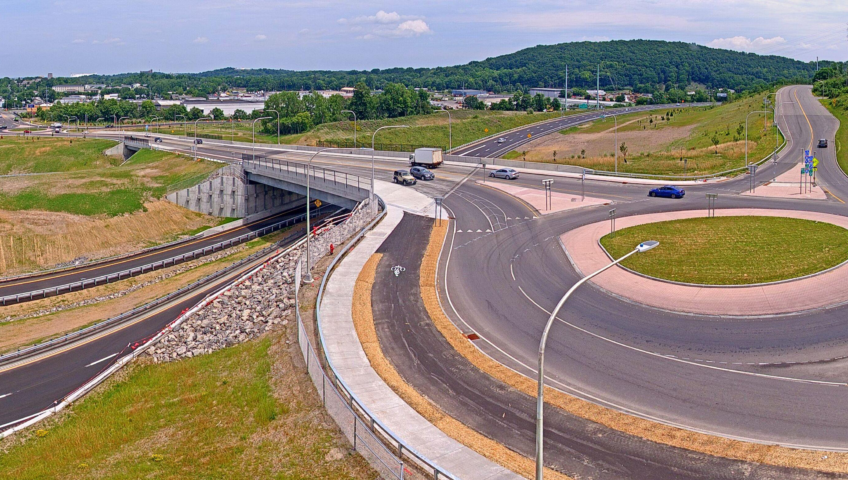
NEW YORK CITY, NY – KC Engineering and Land Surveying, P.C. (KCE) is pleased to announce that it will lead the design efforts for the New York State Department of Transportation’s (NYSDOT’s) largest construction contract to date: the I-81 Viaduct Project – Phase 2, Contract 6 Design-Build.

As part of the CNY Alliance Six team, comprised of A. Servidone, Inc., Rifenburg Construction, Inc., and Economy Paving Company, Inc., KCE will serve as the Lead Designer for this landmark $2.15 billion project, advancing construction of the Community Grid throughout the City of Syracuse and Onondaga County, New York.

This contract represents the largest project in KCE’s history and marks a significant milestone in the firm’s continued growth and evolution within the design-build marketplace. More than a decade after first pursuing design-build opportunities, KCE is honored to assume a leadership role in one of the most transformative transportation infrastructure projects in New York State. Leveraging its extensive industry expertise and highly skilled technical staff, KCE remains committed to delivering safe, innovative, and cost-effective design solutions that provide exceptional value to NYSDOT and the traveling public.

KCE will be supported by its trusted subconsultant partners, including Stantec Consulting Services Inc., Azar Design Co., Architecture, Landscape Architecture, Engineering & Surveying, P.C., Joseph C. Lu Engineering, P.C. (Lu Engineers), MAKS Engineers, P.C., and MP Engineers & Architects, P.C.

The CNY Alliance Six team will also be supported by Prudent Engineering, LLP, which will provide Construction Quality Control services, and Atlantic Testing Laboratories, Limited, which will provide Materials Testing services.

KCE is proud to continue its involvement in the I-81 Viaduct Project and to support NYSDOT’s mission of reconnecting neighborhoods, enhancing mobility, improving safety, and delivering long-term infrastructure improvements that will benefit the Syracuse community and the surrounding region for generations to come.

“We are honored to serve as Lead Designer on NYSDOT’s largest construction contract to date,” said Raj Ravilla, President and CEO of KC Engineering and Land Surveying, P.C. “This award reflects the confidence our partners have placed in KCE and recognizes the dedication and expertise of our employees. We look forward to working collaboratively with the CNY Alliance Six team and NYSDOT to successfully deliver this transformative project for the people of New York State.”



Dig Safely This Spring and Summer

Regardless of any lingering chill in the air, spring has officially sprung and most homeowners are happy to trade in their snow blowers for lawn mowers.

This is the time of year when people start to make landscaping and gardening plans. Not only is April the first full month of spring, it is also National Safe Digging Month.

While many homeowners may be thinking about planning gardens, starting home improvement projects, and sprucing up their properties, it’s important to remember to call 811 before ANY dig.

811 is a national hotline that allows property owners, landscapers, and others to find out where they can safely dig.

Whether you’re getting ready to excavate your backyard in order to add an in-ground pool, or want to plant some flowers, no digging project – no matter how small – should be started without first calling 811.

Why? Because utility lines can be buried just a few inches underground, and without ensuring that the spot you’re digging in is free of utility lines, you could unintentionally damage them. In doing so, you could wind up damaging property, inadvertently causing power outages, and incurring costly fines and fees.

So how does calling 811 work?

First, make the call at least a few days before you dig. Let the representative know exactly where you plan to dig. They will then notify your local utilities operators. The utilities workers will come to your property and mark out where any utility lines are buried.

Once any utility line locations have been marked, you can plan to avoid these areas and safely proceed with your project.

Once your project is complete, you can enjoy the results of your hard work!

For more information about safe digging, visit http://call811.com/.


NYSDOT Maintenance Facility Oil Water Separator Project

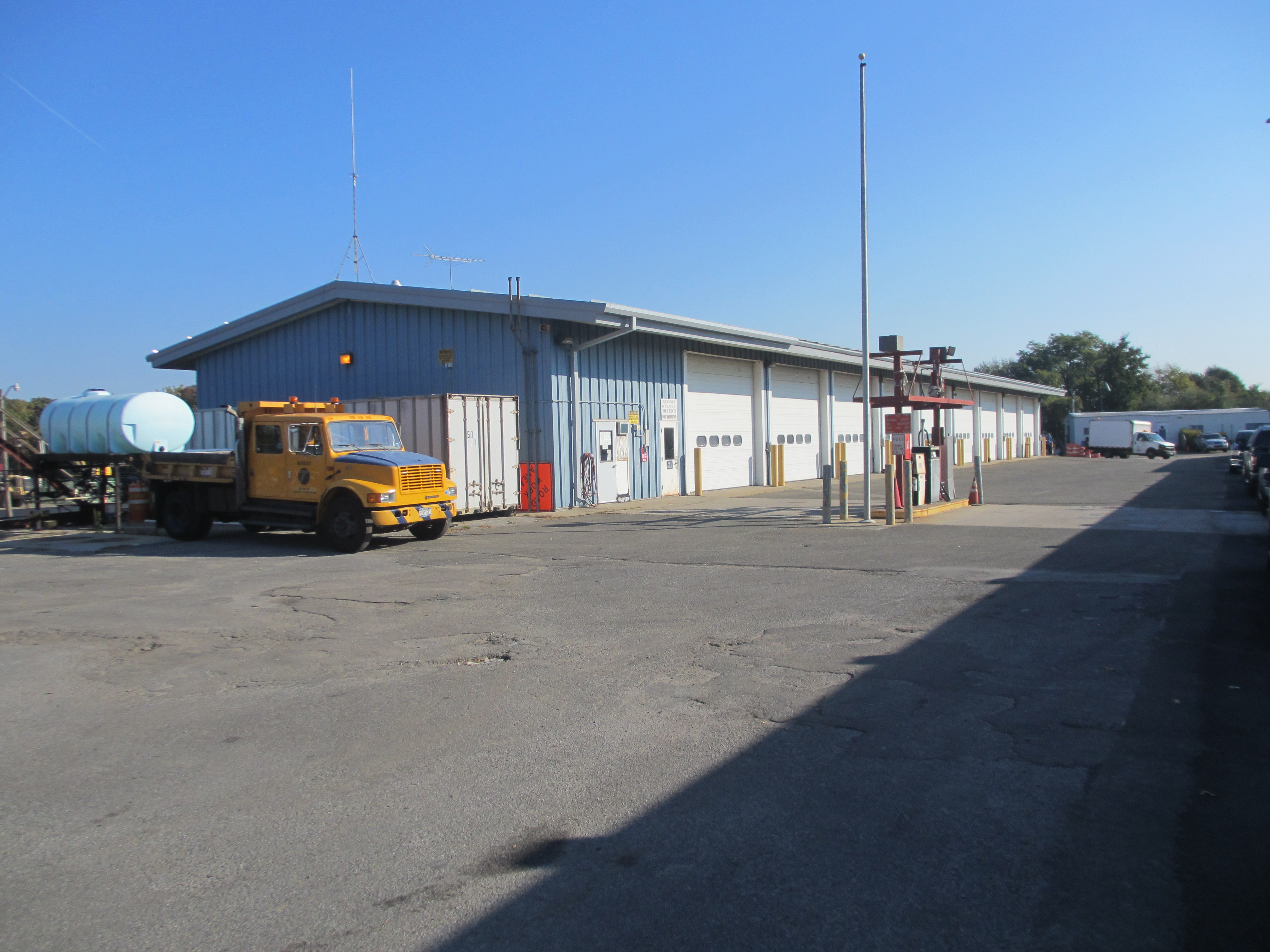
The NYSDOT Maintenance Facility in Hauppauge, Long Island provides road maintenance and inclement weather service to a large stretch of NYSDOT roadway on Long Island.

KC recently designed a new salt storage building at the facility in an effort to improve functionality. For the main vehicle storage and maintenance garage, KC designed a multitude of improvements to assist with operations. An oil water separator system was designed to assist in the recovery of waste oil during vehicle maintenance and washing.

The system employs floor drains along the building aprons that collect drippings and wash water, and then pass it through an underground oil water separator tank. The separator is equipped with coalescing plates for proper separation, interstitial volume for leak detection, and alarms for full and high levels. KC also modified the building with the addition of new garage doors along one side to allow full passage-through access for vehicles and to improve overall usability of the existing garage space.

In addition to improvements to the existing maintenance facility building, KC designed new pad spaces for three new operations office trailers that will be installed on site. The pads include full footings and tie downs for the trailers, as well as new 100-amp electrical services for the building. KC also added a new vehicle cold weather preparedness area that provides electrical services to run truck engine block heaters during cold weather operations.


The Benefits of Design-Build

The design-build project delivery method differs from the traditional design-bid-build delivery method in that it involves one contract between a design-build team and the project owner rather than two separate contracts between the project owner and a contractor and the project owner and a designer. This method streamlines the process, unifying the designer and contractor to enhance their collaboration and prevent conflicts.

Design-build is still in its nascent stages in New York, where agencies are beginning to recognize the benefits of this increasingly popular delivery method, which include more innovative designs, accelerated project delivery, lower project cost, and fewer change orders. ACEC New York endorses the design-build delivery method under the condition that it is a two-step procedure, “a process that best protects the interests of the owner, design professional, contractor, and the public.” This process requires a New York State registered and licensed design firm, independent of the project owner and teamed with an equally qualified contractor, be selected based on qualifications and experience during a two-phase Qualifications-Based Selection (QBS) process with transparent selection criteria.

An example of one such design-build project is NYSDOT’s D900034 Region 8 Design-Build Project in Ulster County, for which the KC Team was shortlisted in the RFQ stage and subsequently selected as the most qualified in the final RFP stage, with a perfect technical score. This design-build project involves the full replacement of two bridges: BIN 1040750 NYS Route 209 (3-span continuous steel girder bridge with a total span of 402 feet) over Rochester Creek and BIN 1019700 NYS Route 28 (7-span continuous steel girder bridge with a total span of 994 feet) over Esopus Creek.

As Lead Designer, KC is performing the structural design of the two structures, including the three-span continuous multi-steel superstructure and seven-span continuous multi-steel superstructure, staged construction and work zone traffic control, geotechnical work, and hydraulic analysis. Because of our well-integrated team and fast-tracked design during the RFP stage, we were able to deliver an innovative solution that reduced the overall bridge span length while maintaining full structural stability and adhering to all applicable codes and regulations.

KC is thrilled to help pioneer design-build projects in our backyard, and we look forward to playing a key role in future projects as New York joins this growing trend in the design and construction industry.


Warwick Public Transit Garage Project

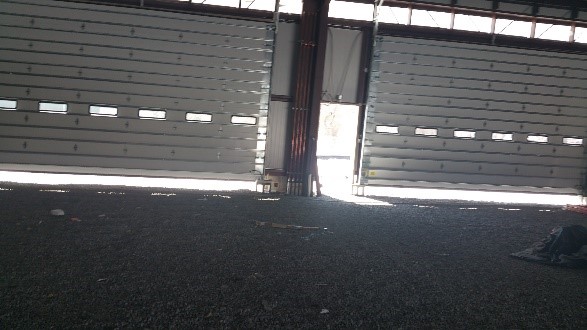
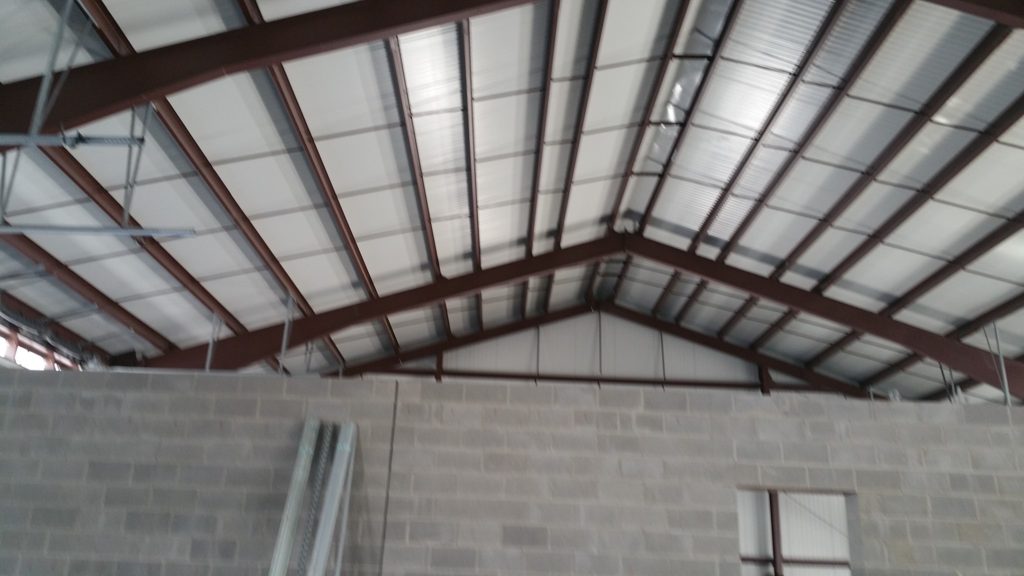
KC provided architectural and engineering services to complete the design of the Warwick Public Transit Garage, including the design of the prefabricated steel building, foundation, and slab on grade; plumbing systems; roof drainage system; heating, ventilating, and air conditioning (HVAC) systems; and other components. Additionally, KC is preparing technical specifications for the project to comply with all current code provisions.

KC committed to delivering a facility with both exceptional functionality and aesthetic appeal. Accordingly, special consideration was given to the rural character intrinsic to the area in addition to the building’s proximity to a main artery to the Village and its placement within the Town building complex.

This project was funded by grants from the Federal Transit Administration (FTA) and the NYSDOT, which were awarded through Orange County. Therefore, the project required close coordination with both the County and Town as well as strict adherence to all FTA, NYSDOT, and local requirements affecting municipal construction projects.

This project was put out to bid, with Verticon Construction of Monroe, NY succeeding with a bid of $2,296,000. This bid is $1 million less than their previous bid on this project when it was first released as a design-build project, which the Town cancelled before releasing the design-bid-build project for which KC was selected. Considering this lower bid and adding KC’s design fee, the new project should realize the Town of Warwick a cost savings of $800,000.