


STEM Activities for Kids to Enjoy During Quarantine

For kids who hated to wake up and get ready for school, the recent stay-at-home orders likely seemed like a welcome break from the normal routine. But, even for the children who were not fans of the daily school routine, after being stuck at home for over a month, the novelty has likely long since worn off.

Not to worry, we have compiled a list of fun activities and websites that can help stave off boredom for at least the next few weeks.

  1. Dr. Kate Biberdorf (Kate the Chemist), on the Today website, offers up recommendations for two science experiments for kids, including the creation of homemade puffy slime.
  2. The Legends of Learning website is currently offering access to free math and science games.
  3. LiveScience.com has listed a roundup of activities and resources available to supplement home learning during the coronavirus pandemic.
  4. The James Dyson Foundation, an organization aimed at raising up and educating the next generation of engineers in the United Kingdom (UK), is offering 44 science challenges, available for download, on its website.
  5. Massachusetts Institute of Technology (MIT) has created a website that offers education for kids in the area of artificial intelligence (AI).
  6. Bonus for parents: Check out this article on what Google is doing to launch a new category of apps in the Google Play Store called, “Teacher Approved”. When you download any of these apps, which can be found within the Kids tabs in the Play Store, you can rest assured that these apps have been pre-approved by educators.

Being stuck at home does not have to be boring. It can be an opportunity for kids to engage in the kind of fun educational activities they would not otherwise have time for. And best of all, they get to enjoy these activities while spending quality time with you.


National Safe Digging Month

Regardless of any lingering chill in the air, spring has officially sprung and most homeowners are happy to trade in their snow blowers for lawn mowers. This is the time of year when people start to make landscaping and gardening plans. Not only is April the first full month of spring, it is also National Safe Digging Month.

While many homeowners may be thinking about planning gardens, starting home improvement projects, and sprucing up their properties, it’s important to remember to call 811 before ANY dig.

811 is a national hotline that allows property owners, landscapers, and others to find out where they can safely dig.

Whether you’re getting ready to excavate your backyard in order to add an in-ground pool, or want to plant some flowers, no digging project – no matter how small – should be started without first calling 811.

Why? Because utility lines can be buried just a few inches underground, and without ensuring that the spot you’re digging in is free of utility lines, you could unintentionally damage them. In doing so, you could wind up damaging property, inadvertently causing power outages, and incurring costly fines and fees.

So how does calling 811 work?

First, make the call at least a few days before you dig. Let the representative know exactly where you plan to dig. They will then notify your local utilities operators. The utilities workers will come to your property and mark out where any utility lines are buried.

Once any utility line locations have been marked, you can plan to avoid these areas and safely proceed with your project.

Once your project is complete, you can enjoy the results of your hard work!

For more information about safe digging, visit http://call811.com/.


Everything You Wanted to Know About Water Treatment Plants

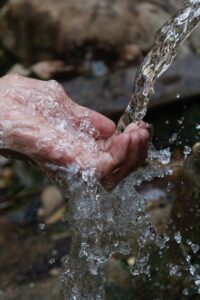
Did you know that 99.7% of Earth’s water supply is not usable by humans? This unusable supply includes not only saltwater but fresh water supplies from lakes and streams that often contain Cryptosporidium, E. coli, Hepatitis A, and Giardia intestinalis. The water we drink, from taps and bottles and fountains, goes through an extensive treatment process to rid itself of these harmful pathogens.

A water treatment plant serves its local community by sourcing its water from the surface, from lakes, streams, reservoirs, or from the ground, where water pools after seeping in from rain or snowfall. The plant is then tasked with disinfecting and purifying this “raw,” or untreated, water.

Below is a step-by-step look into how your water is treated:

The first step of the purification process is coagulation and flocculation: in this step, a coagulant, such as aluminum sulphate or iron salt, is added to the water to neutralize the negative charge of any dirt, parasite, or bacteria that might be present. This neutralization enlarges the harmful particles in preparation for the following step.

The second step is referred to as sedimentation, where the now enlarged dirt particles can more easily sink to the bottom of the water.

The third step is filtration, where the water is run through sand, gravel, or charcoal to weed out the enlarged dirt particles.

The fourth step is disinfection where a chemical such as chlorine or chloramine is added to the water to both kill any remaining parasites or bacteria and prevent the growth of new ones.

Finally, the purified water is stored in a water tower and, with plenty of gravity and pumps, is delivered into your home.

Want to find out more about the quality of your drinking water? Visit this site to access an annual drinking water quality report from your local water supplier.


Good Construction Zone Safety Practices


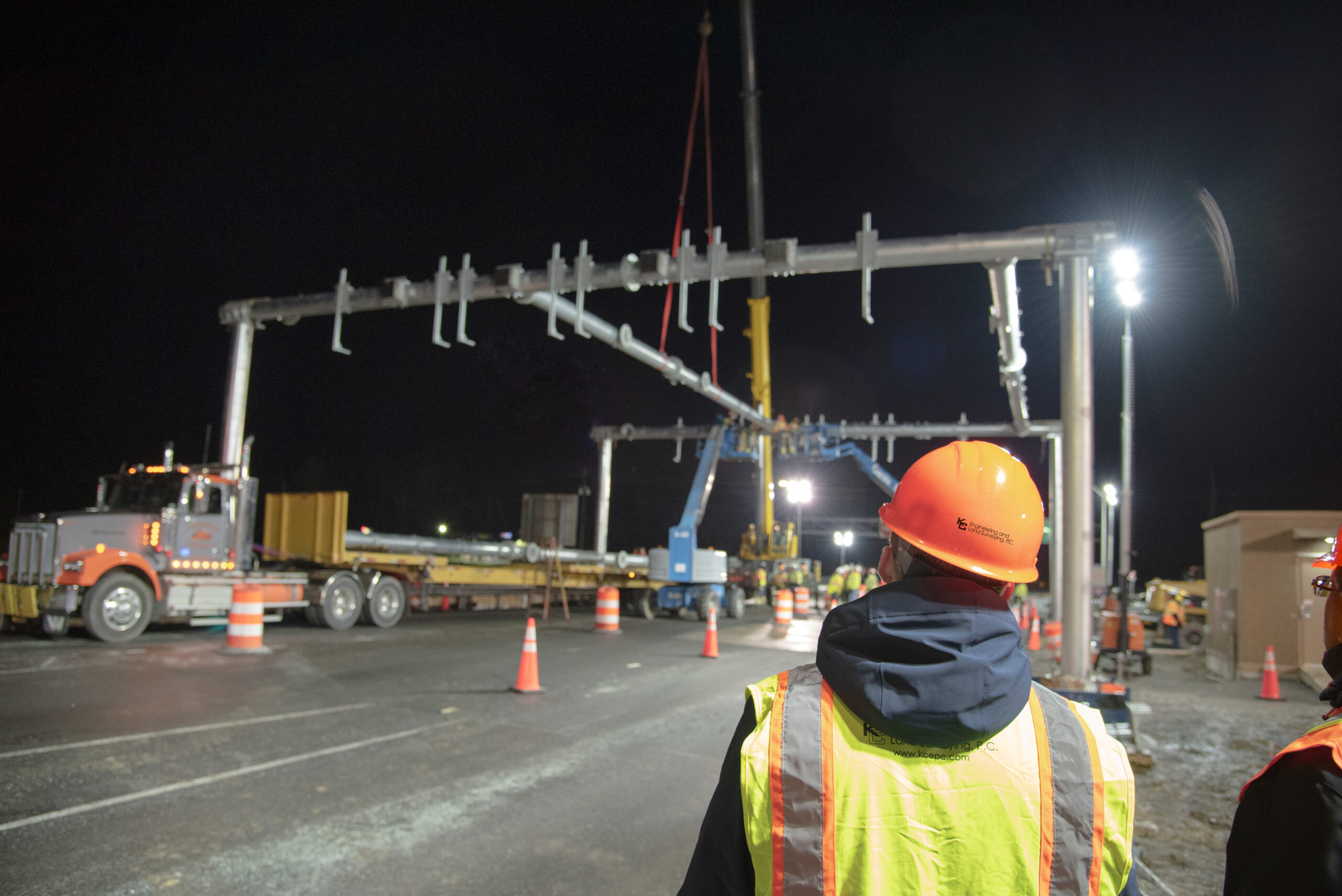
It’s an undeniable fact that construction sites obstruct the movements and activities of our daily lives—on our morning commutes to work, for example, the last thing we want to see is that bright orange sign that reads “Road Work Ahead.” Sidewalk closings, too, prove to be nothing short of inconvenient as they often force pedestrians to haphazardly share the road with motorists. Compounding this inconvenience is the danger of proximity to an active construction site: according to Creative Safety Publishing, an organization dedicated to providing safety tips for the workplace, in 2012 a student at Ohio State University was struck by a dump truck while riding his bike past a construction site. The New York Post reported that between the years 2010 and 2015, 59 people had been struck by falling debris from New York City construction sites.

Follow these three simple steps to stay safe and become a more mindful and respectful passerby at construction sites:

  1. Respect the signs and learn what they mean.

Take an active role in your safety and understand important safety signs.

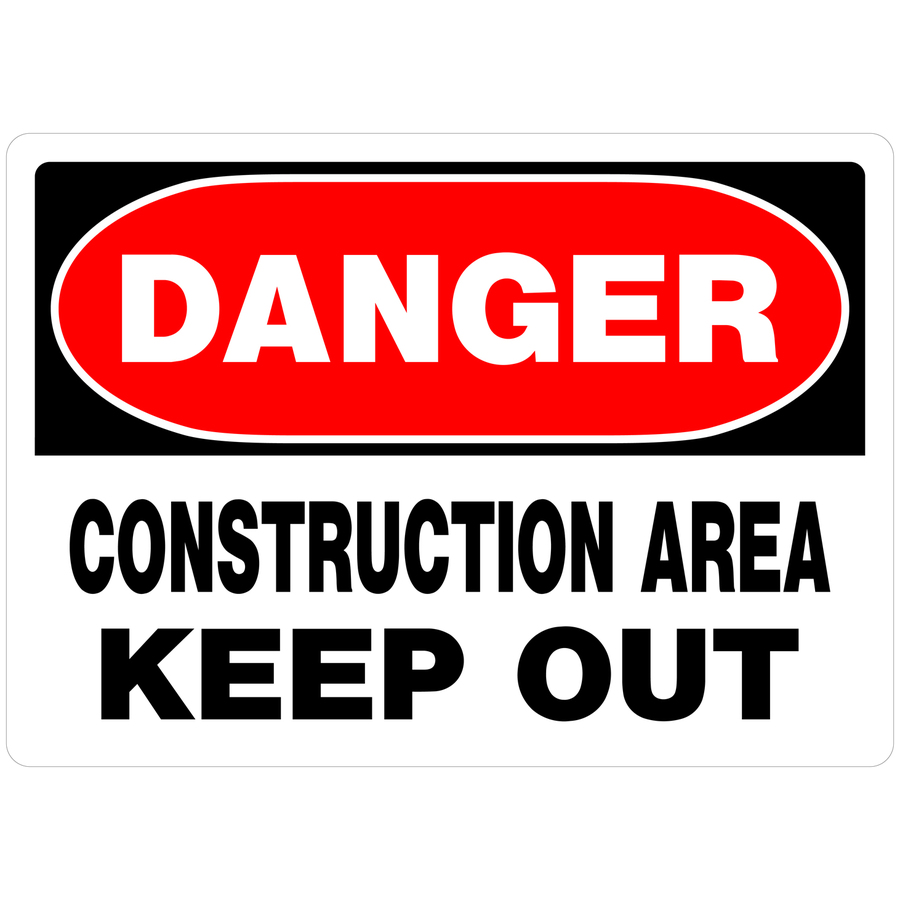
Safetysign.com identifies five important symbols that communicate three important messages to both workers and passersby: the hazard, the means of avoiding the hazard, and the consequences of not avoiding the hazard. Common symbols include:

Hazard symbols (yellow triangle with black border) warn us about potential site dangers and their consequences (think: biohazard sign).

Prohibition symbols (red circle with red slash through middle) instruct us on what activities to avoid when near the site (think: “No Smoking” sign).

Mandatory symbols (white square or blue circle depicting an instructional action) tell us what we must do to stay safe when near a construction site (think: “Hard Hat Area” sign).

Information symbols (white square with a red image) direct us to important life-saving equipment and exits in case of an emergency (think: fire extinguisher sign).

Safety symbols (white square with black image, occasionally accompanied by a red circle with a slash) both shows us the proper steps to take to avoid danger and the consequences of ignoring important hazard warnings (think: “Caution: Wet Floor” sign).

  1. Avoid “rubbernecking.”

According to a study conducted by researchers at the Virginia Tech Transportation Institute, engaging in distracted driving activities such as rubbernecking can double your risk of crashing. Sneaking a peek at an active construction site for just two seconds can increase the risk of an accident up to 24 times. While construction sites can be sources of curiosity and excitement, catching closeup views of the new bridge’s construction at 60 miles per hour (mph) is not worth the risk of threatening your life and the lives of others.

  1. Don’t gawk: research!

Calm your curiosity safely by visiting this website that keeps you in the loop about projects in New York City that are currently under construction. Excessive staring, both while driving and on foot, can cause significant disruptions around a construction site and can be dangerous to yourself, your fellow travelers, and onsite workers. If you are curious about a project, simply select its location on the site’s provided map and read up!


Engineers Are Celebrated During National Engineers Week

This week is National Engineers Week!

This week-long event recognizes engineers as a central asset to our world and celebrates their “positive contributions to quality of life,” according to the National Society of Engineers.

Engineers created structures like the Hoover Dam, the Panama Canal, and even the Great Wall of China! Without engineers, these massive and impressive feats would have never come to be.

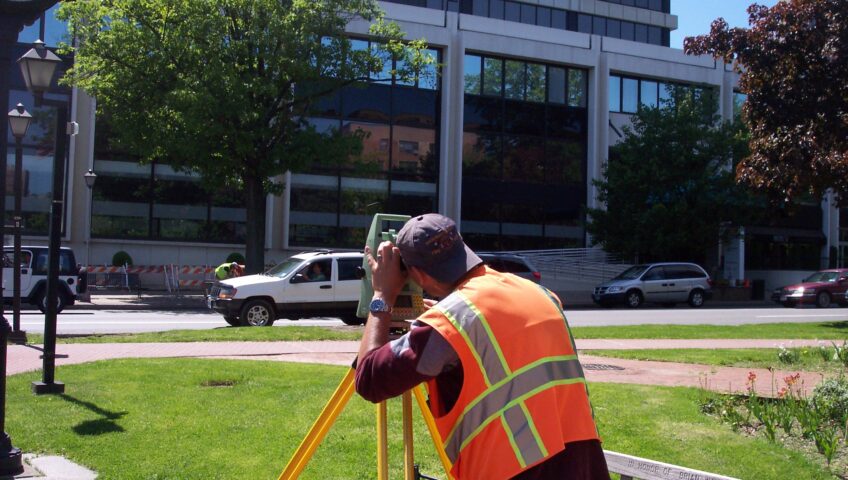
Founded by the National Society of Professional Engineers in 1951, National Engineers Week has coincided for over 50 years with the week of President George Washington’s birthday (February 22nd) to pay homage to the nation’s first engineer. Washington was introduced to engineering at an early age, often partaking in land surveying opportunities and ultimately going on to design a country estate on a plantation he’d inherited — Mount Vernon.

Each year, DiscoverE, an organization focused on supporting and promoting growth of the engineering and technology communities, encourages children to explore the STEM community through interactive lessons, child-friendly activities, and involvement with their own local engineering communities.

Across the nation in cities like Port Jefferson, NY; Raleigh, North Carolina; and Los Angeles, California; DiscoverE hosts a series of workshops and presentations to promote the importance of engineering. Children are able to meet and speak with veteran engineers, participate in fun, educational activities, and learn about the global scale of engineered contributions.

For more information on upcoming STEM events sponsored by DiscoverE, visit http://www.discovere.org.