Moon Landing Anniversary

Wednesday, July 20th, 2022, will mark the 50th anniversary of the Apollo 11 Moon landing mission, which was successfully fulfilled by astronauts Neil Armstrong, Buzz Aldrin, and Michael Collins. The astronauts took off on July 16th, 1969 out of National Aeronautics and Space Administration’s (NASA’s) Kennedy Space Center in Florida and set foot on the moon on July 20th, 1969. To successfully achieve the Apollo 11 mission, it took hundreds of people working behind the scenes for years to fully execute this perfect mission, including NASA’s mechanical engineers crew, who also made it easier for other successful missions to take place later on. NASA’s mechanical engineers’ abilities to solve problems, design, and build were vital components that helped NASA organize, piece together, and successfully execute these missions. The mechanical engineer crew worked long hours and around the clock developing new technologies in addition to perfecting old ones. Some of the typical technology systems that NASA’s mechanical engineers developed and worked on were spacecrafts, satellites, and engines. In order to be part of NASA’s mechanical engineer crew, one must have a range of knowledge and skills in disciples such as aerospace, computers, and electronics to be able to work on various tasks and meet NASA’s strict criteria.

Since the first mission, NASA had several successful moon landings. Aside from Apollo 11, NASA launched the following Apollos:

  • Apollo 12 with astronauts Charles "Pete" Conrad and Alan Bean;
  • Apollo 14 with astronauts Alan B. Shepard Jr. and Edgar D. Mitchell;
  • Apollo 15 with astronauts David R. Scott and James B. Irwin;
  • Apollo 16 with astronauts Charles M. Duke and John W. Young, who was also part of the Apollo 10 orbital; and
  • Apollo 17 with astronauts Harrison H. Schmitt and Eugene Cernan, who was also part of the Apollo 10 orbital.

NASA also had difficult missions, one happening during the third moon landing mission called Apollo 13. After launching the Apollo 13 spacecraft, the astronauts never made it to the moon because they experienced malfunction issues that caused them to lose oxygen. One of the oxygen tanks exploded and almost caused a near-disaster, but luckily the astronauts were able to loop around the moon and make a safe re-entry and landing on the Earth’s atmosphere. After studying what caused the failures on the Apollo 13 mission, NASA made multiple changes to the design of the spacecraft for increased safety, which allowed Apollo 14, 15, 16, and 17 missions to be successful.

If interested about NASA’s missions and mechanical engineering and would like more information, please visit https://www.nasa.gov/


 

International Women in Engineering Day

Thursday, June 23rd, will mark the 6th International Women in Engineering Day (INWED). Initially, popularity and enthusiasm for the day expanded the celebration from its concentrated origin in the United Kingdom to become a worldwide event.

Originally launched in 2014 by the Women’s Engineering Society (WES), INWED sought to recognize and celebrate the presence and importance of women in engineering. INWED’s website calls the day “an accessible and inspiring way for companies, institutions, organizations, schools, universities, and individuals to raise the profile of women in Science, Technology, Engineering, and Math (STEM) and related sectors, showcase a commitment to diversity, and inspire future generations by organizing their own events and activities.”

WES’ own mission to be active supporters of women, collaborators with government agencies and policy makers, and challengers of stagnant cultures merges into the yearly celebration of INWED.

This year’s theme, #Inventors&Innovators, will focus on highlighting the work women engineers around the world are doing to build a better future. INWED will focus on encouraging all supporting groups to organize events in support of INWED. Some examples on how to get involved, according to the campaign website, include becoming a STEM ambassador; hosting a networking, mentoring, careers, or social event; signing up to their newsletter and following their social media accounts, such as Twitter and Instagram at @INWEB1919, and joining WES as a corporate partner; and / or promoting this year’s theme with the #Inventors&Innovators and #INWEB22 hashtags.

For more information about INWED and how you or your organization can participate, visit www.inwed.org.uk.


What Challenges is the Engineering Industry Facing?

What common challenges is the engineering industry facing in today’s society?

It’s no secret that the engineering industry uses their knowledge in creative ways to find solutions, even while the world has been rapidly changing. Engineers are known throughout history to be the ones to make things happen regardless of what issues the world could be facing. Today’s challenges are no different, which is why engineers are working around the clock to build a sustainable world. However, in order to build a sustainable world, the engineering industry needs to tackle internal challenges, including skill and staff shortages, and the lack of female and minority presence.

There is an engineering skills gap and, in order to overcome the skill and staff shortage of engineers, we need evaluate the root causes of the issues. A root issue is the lack of knowledge regarding what engineers do. When there is not enough awareness on the subject, this turns into a lack of opportunity for future generations. A way to help fix the engineering skills gap is to educate the up-and-coming generations in schools; having knowledge about the different branches of engineering and what each specializes in can spike kids’ curiosity about the industry. This also shows that engineering is not just one general subject, but that there is a variety of branches to choose from depending on their interests.

The lack of female and minority presence has been an ongoing challenge in the engineering industry, and this is caused by misconception and underrepresentation. One of the root issues is the perceived culture of engineering, where the industry is known as male dominant. Due to the low percentage of female in the industry, most companies tend to have less consideration of women’s needs, which causes toxic work environments and leads women to leave the industry sooner than men. Also, the lack of representation of women and minority engineers shows that there is no example for the future generation of engineers to follow, which leads to discouragement. Creating a welcoming environment for both women and minorities is one of the tools to overcome this challenge in the engineering industry.

The engineering industry needs to build a new image and show the future generations that the engineering industry is for everyone. An inclusive industry will be the solution to these challenges because as technology advances, the engineering industry will face larger scale problems and the best way to tackle these current and future issues is by having a large range of diverse minds working together.


Infrastructure Week, Day 5: Roads

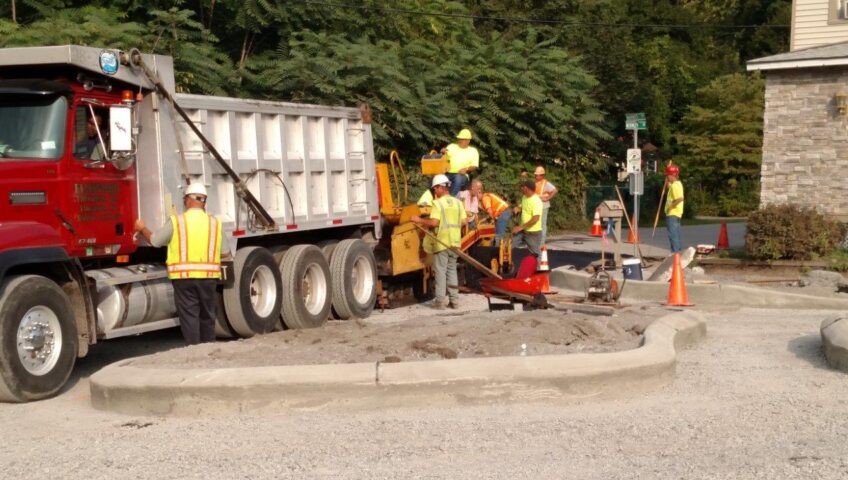
In the U.S., roads are an unavoidable part of our everyday lives. We use roadways daily to travel to and from work, school, social engagements, and more. So how do we deal with the issue of America’s crumbling roadway infrastructure?

As the years go by, American metropolitan areas are stymied by traffic congestion.

The average American spends 97 hours a year stuck in traffic. That’s 12+ vacations days! Meanwhile, suburban and more rural areas are forced to contend with deteriorating road conditions, as well as outdated and dangerous traffic configurations.

At KC Engineering and Land Surveying, P.C. (KC), maintaining and upgrading our roads remains an important priority. Our civil engineers are skilled in parking lot and roadway design, and along with our traffic engineers they can effectively and efficiently plan, design, and oversee the construction of intersection improvements, parking facilities, maintenance and protection of traffic plans, highways, utility relocations, site lighting, driveways and other roadways, curbs, and sidewalks so that the outcomes not only provide for smooth transitions but also for economically functional results.

With projects like Cross Westchester Expressway (I-287) Exit 8E Reconstruction, 5th Avenue Reconstruction, DeLavergne Avenue Reconstruction, and Milling and Resurfacing of Federal Aid Roads, KC strives to maintain the safety and commutability of area roads, because at KC we recognize the vital importance of roadway infrastructure.


Infrastructure Week, Day 4: Wastewater

Wastewater is the dirty little secret no one likes to talk about. Nevertheless, managing our nations wastewater is of the utmost importance.

No infrastructure plan is complete without wastewater management. It can impact the health of residents, strengthen, or weaken the appeal of a locality, have an effect on the environment.

As the nation’s population continues to grow, wastewater management has become increasingly crucial. Over the next 20 years, the U.S. is expected to gain more than 56 million wastewater treatment system users. This indicates the need for wastewater infrastructure improvements.

About 14,748 wastewater treatment plants currently serve nearly 240 million Americans, or 76% of the U.S. population. In its current state, our wastewater infrastructure suffers from 23,000 to 75,000 sanitary sewer overflow events every year, according to the U.S. Environmental Protection Agency. These facts demonstrate the need for increased wastewater infrastructure funding.

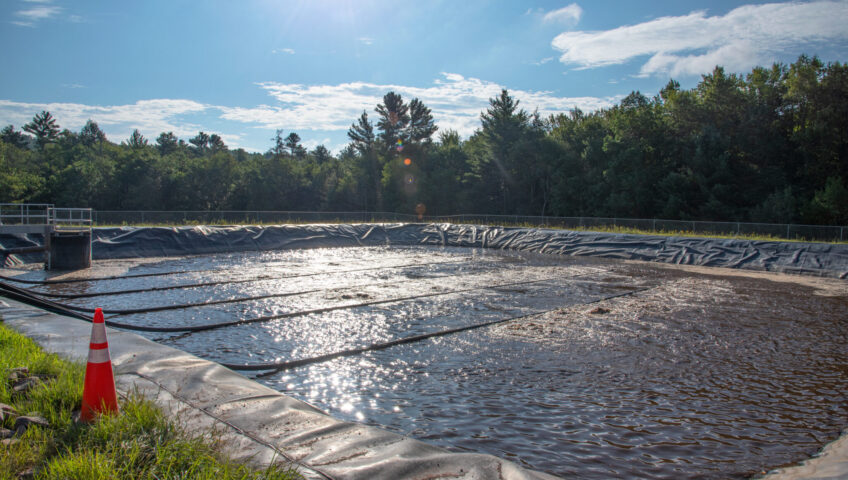
At KC Engineering and Land Surveying, P.C. (KC), our wastewater treatment group has designed, constructed, and helped to operate over 70 facilities. We work with government, industrial, and private clients to meet a full range of wastewater related needs. We approach each project with innovative and creative expertise to deliver comprehensive engineering services that solve the most intricate wastewater challenges from concept through design, construction, and operation.

With projects like the Tri-Municipal Sewer Commission Compost Permit Renewal, Wallkill Raw Sewage Pump Replacement, and Wappingers Falls Wappingers Falls Sanitary Sewer Pipe TV Inspections, KC has helped to increase capacity and improve the performance of existing treatment facilities. KC strives to meet strict water discharge policies, conserve energy, and reduce environmental impact.