
World Water Day

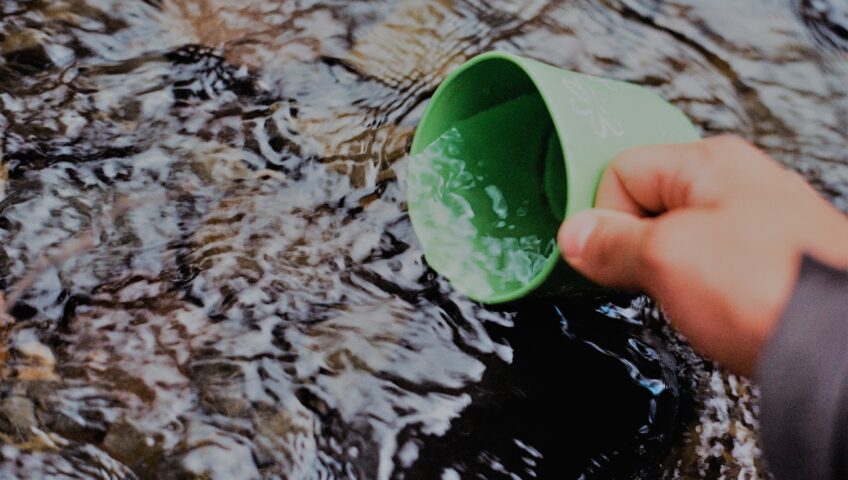
World Water Day is an annual observance held on March 22nd since 1993 to bring awareness of the importance of worldwide freshwater. In honor of this day, it’s important to bring awareness on how important freshwater is, the main concerns on how freshwater is suffering in today’s society, and how we can address these freshwater issues we are facing.

We all know that freshwater is a vital resource for life due to being an important aspect of supporting human civilization and our ecosystems. But did you know that less than 3% of the world’s surface is freshwater? Therefore, is important to come up with solutions and work together to preserve freshwater worldwide. We might not see freshwater as a luxury since we can easily obtain it, but in other parts of the world, it is hard to obtain clean water. Freshwater is important to our food production because, without freshwater, it would be impossible to harvest sustainable crops and food. Having access to clean water is indispensable for agricultural production. In addition, freshwater is one of the main sources to feed the farmers’ animals.

One of the concerns of freshwater is pollution, and it is the main reason why our freshwater is suffering today. Pollution has been taking over our freshwater resources such as rivers and lakes, which is making our water undrinkable, and it is also causing harm to our wildlife. Therefore, so many species of our wildlife are in danger of extinction. One of the reasons why we cannot maintain proper sanitation to our rivers and lakes is due to overuse. The overuse of these freshwater resources can be trigged by many factors, such as population growth. Population growth causes our rives and lakes to dries up, which leads to freshwater shortages.

We need to act now and address these freshwater concerns because this will be a big and dangerous issue that our future generations will have to face. In order to fight the freshwater crisis, we need to come up with strategies and approaches worldwide. Some important areas that we can approach are getting educated on these issues and coming up with ways to change our lifestyles, coming up with new technologies to recycle wastewater, and improving our infrastructure.

We need to unite globally and individually to do our parts in maintaining our freshwater resources no matter what side of the world we are in.


 

International Women’s Day

Today, March 8th is International Women’s Day, a global holiday that uplift the voices of women worldwide and celebrates the impacts they have made throughout history. Whether the impacts were made culturally or historically, today is a beautiful day to highlight some engineering heroes’ achievements who paved the way for the female engineers of today.

Even with gender and/or racial inequality, the following women made history in National Aeronautics and Space Administration (NASA):

  • Mary Jackson was born in 1921 in Hampton, Virginia. She was an African-American NASA engineer who made it possible for America’s first men to travel to space. She was known as a human computer who, behind the scenes, calculated the orbital trajectories. Aside from engineering, she was passionate about advocating for women and minorities in the engineering field, so after working 30 years with NASA, she retired in 1985 and shifted careers to focus on becoming an equal opportunity specialist to help women and minorities.
  • Dorothy Vaughan was born in 1910 in Kansas City, Missouri. She was the first African-American supervisor for the National Advisory Committee for Aeronautics (NACA). She advocated for her employees by making sure they received promotions and pay raises. After segregation ended in 1985, that is when NACA became NASA and Vaughan became a programmer for a new division that was created, named Analysis and Computation. While working in this division, her group worked behind the scenes and played a major part in the success of a satellite-launching rocket called Scout. Vaughan retired in 1971.
  • Katherine Johnson was born in 1918 in White Sulphur Springs, West Virginia. She was a pioneer in mathematics that landed her a job at NASA as a Trajectory Analysis for Alan Shepard’s mission in 1961, and then for John Glenn's orbital mission in 1962. While working for NASA, she was the behind-the-scenes math genius that made many missions like space shuttle, Earth Resources Satellite, and Apollo’s Lunar Lander successful. Thanks to her achievements, she received the highest civilian honor in the United States: the Presidential Medal of Freedom in 2015. Johnson retired in 1987.
  • Kalpana Chawla was born March 17, 1962, in Karnal, India. She received a Bachelor of Science degree in aeronautical engineering in India, and later on moved to the United States to continue her education and received a master’s degree in aerospace engineering. After being naturalized in the United States, she became an astronaut, engineer, and the first woman of Indian descent to go to space. Chawla lost her life during a mission, but her legacy continues to live through her work. Her research helped other astronauts understand health and safety during spaceflight. She continues to be an inspiration for many immigrants who are chasing the American dream.

For more information about women who made history in NASA, please visit: https://www.nasa.gov/


National Engineer’s Week

This week is National Engineers Week!

This week-long event recognizes engineers as a central asset to our world and celebrates their “positive contributions to quality of life,” according to the National Society of Engineers.

Engineers created structures like the Hoover Dam, the Panama Canal, and even the Great Wall of China! Without engineers, these massive and impressive feats would have never come to be.

Founded by the National Society of Professional Engineers in 1951, National Engineers Week has coincided for over 50 years with the week of President George Washington’s birthday (February 22nd) to pay homage to the nation’s first engineer. Washington was introduced to engineering at an early age, often partaking in land surveying opportunities and ultimately going on to design a country estate on a plantation he’d inherited — Mount Vernon.

Each year, DiscoverE (http://www.discovere.org/), an organization focused on supporting and promoting growth of the engineering and technology communities, encourages children to explore the STEM community through interactive lessons, child-friendly activities, and involvement with their own local engineering communities.

Across the nation in cities like Port Jefferson, NY; Raleigh, NC; and Los Angeles, CA, DiscoverE hosts a series of workshops and presentations to promote the importance of engineering. Children are able to meet and speak with veteran engineers, participate in fun, educational activities, and learn about the global scale of engineered contributions.

For more information on upcoming STEM events sponsored by DiscoverE, visit http://www.discovere.org.


African-American Pioneers in Engineering You Should Know About

February is African-American History Month. As such, it is the perfect opportunity to highlight the engineering achievements of African-Americans who, although they may have contended with racism, societal inequality, and discrimination, worked hard to overcome obstacles and accomplished great things in the field of engineering.

  1. Walter Brathwaite, an American engineer who was born in Jamaica, was hired by Boeing in 1966. As Senior Engineer, he led the team that invented CAD systems for designing commercial Boeing aircraft. Over the years, Brathwaite rose through the ranks, eventually becoming President of Boeing Africa. When he retired in 2003, he was the highest ranking African-American executive of the company.
  2. Howard P. Grant graduated from the University of California, Berkeley, in 1948, making him the first African-American to graduate from the Berkeley College of Engineering. That same year, Grant also became the first known black member of the American Society of Civil Engineers. He subsequently became the first African-American civil engineer for the City and County of San Francisco and the second African-American civil engineer to be licensed by California. He worked in the San Francisco water department until 1984, and also held the position of president and treasurer of the California Society of Professional Engineers.
  3. George Biddle Kelley graduated from Cornell University's College of Civil Engineering in 1908. He went on to become the first African-American engineer registered in the state of New York. He was hired by the New York Engineering Department, where he worked on the Barge Canal, a collection of state waterways, during the 1920s.
  4. Elijah McCoy was born in Canada in 1844 to runaway slaves who had escaped Kentucky thought the Underground Railroad. At the age of 15, he moved to Edinburgh, Scotland for an apprenticeship. There he became certified in mechanical engineering. Upon leaving Scotland, he moved to Michigan, where his family was now living. After being unable to find engineering work in Michigan because of his race, he found work as a fireman with the Michigan Central Railroad. Part of his duties included oiling the steam engine parts. Soon McCoy had invented an automatic engine lubricator, which meant that trains were no longer required to stop for lubrication. The lubrication could now occur while the train was moving. As news of the invention spread, many inventors attempted to create their own version of the automatic lubricator. However, it was soon discovered that McCoy’s invention was superior. It is said that railway engineers began requested “the real McCoy” lubricator. McCoy filed a total of almost 60 patents, including designs for an ironing board, a lawn sprinkler, and other machines.


What is Tissue Engineering?

According to the National Institute of Biomedical Imaging and Bioengineering (NIBIB), “tissue engineering evolved from the field of biomaterials development and refers to the practice of combining scaffolds, cells, and biologically active molecules into functional tissues.” Bioengineer Yuan-Chen Fung was the first person who established the term ”tissue engineering” in 1985 while presenting a proposal to the National Science Foundation (NSF). Mr. Fung’s goal with the proposal was to win funding for the Center for the Engineering of Living Tissue at the University of California, San Diego.

Tissue engineering was created from the biomedical engineering discipline and is a method that has the ability to produce tissues that are used to restore and improve certain human body functions. Even though tissue engineering was only established as a term in the late 1980s, it has become an important technology in the medical field due to being created out of living tissues instead of man-made materials. Artificial bones, cartilage, and even skin are some examples of tissue engineering approved by the United States Food and Drug Administration (FDA) that are currently used in the medical field.

As technology advances, more research is conducted and experiments are developed to continue repairing and/or replacing certain human organs. The main goal of tissue engineering is to replace damaged tissues and organs with living and functioning artificial ones. Thanks to the advances in technology and tissue engineering, people with liver, kidney, and heart issues are able to have these organs repaired and/or replaced and continue living a normal life.

To learn more about tissue engineering, please visit: https://www.nibib.nih.gov/science-education/science-topics/tissue-engineering-and-regenerative-medicine