Engineers Are Celebrated During National Engineers Week

This week is National Engineers Week! This week-long event recognizes engineers as a central asset to our world and celebrates their “positive contributions to quality of life,” according to the National Society of Engineers.

Engineers designed structures like the Hoover Dam, the Panama Canal, and even the Great Wall of China! Without engineers, these massive and impressive feats would have never come to be.

Inaugurated by the National Society of Professional Engineers in 1951, National Engineers Week has coincided for over 50 years with the week of President George Washington’s birthday (February 22nd) to pay homage to the nation’s first engineer president. Washington was introduced to engineering at an early age, often partaking in land surveying opportunities and ultimately going on to design a country estate on a plantation he’d inherited — Mount Vernon.

Each year, DiscoverE, an organization focused on supporting and promoting growth of the engineering and technology communities, encourages children to explore the STEM community through interactive lessons, child-friendly activities, and involvement with their own local engineering communities. Across the nation in cities like Port Jefferson, NY; Raleigh, NC; and Los Angeles, CA; DiscoverE hosts a series of workshops and presentations to promote the importance of engineering. Children are able to meet and speak with veteran engineers, participate in fun, educational activities, and learn about the global scale of engineered contributions. For more information on upcoming science, technology, engineering and mathematics (STEM) events sponsored by DiscoverE, visit http://www.discovere.org.

African-American Pioneers in Engineering You Should Know About

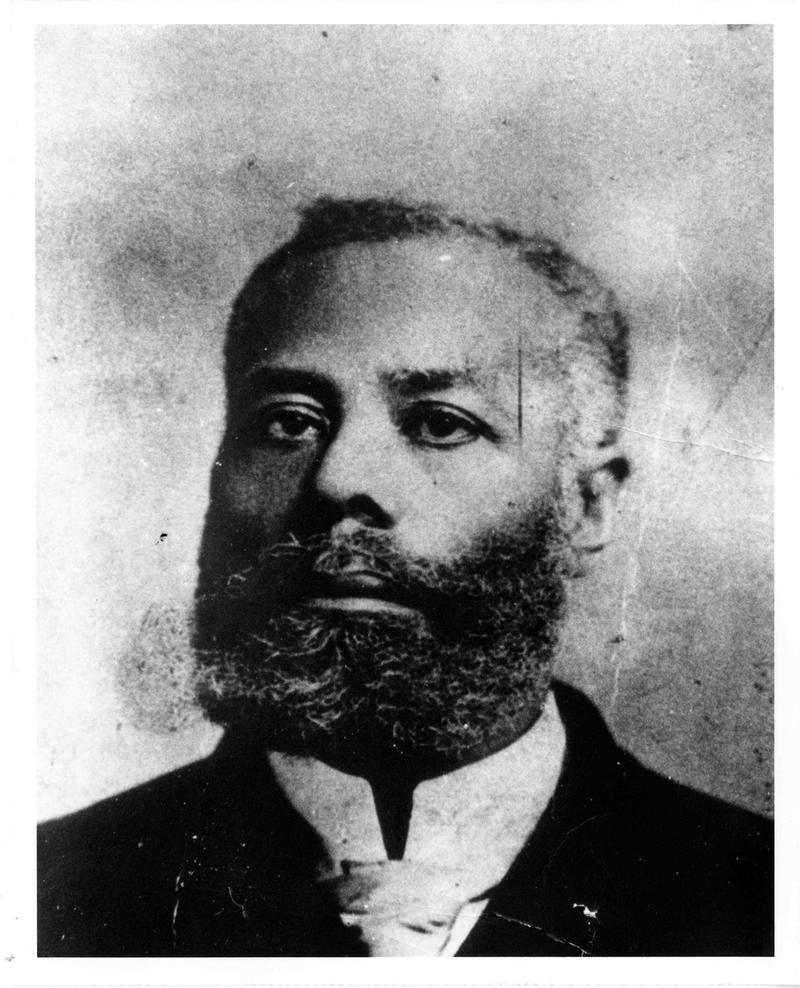
Elijah Mccoy / Credit: Ypsilanti Historical Society (Wikipedia.org)


February is African-American History Month. As such, it is the perfect opportunity to highlight the engineering achievements of African-Americans who, while contending with racism, societal inequality, and discrimination, worked hard to overcome obstacles and accomplished great things in the field of engineering.

Walter Brathwaite, an American engineer who was born in Jamaica, was hired by Boeing in 1966. As Senior Engineer, he led the team that invented computer-aided design (CAD) systems for designing commercial Boeing aircraft. Over the years, Brathwaite rose through the ranks, eventually becoming President of Boeing Africa. When he retired in 2003, he was the highest ranking African-American executive of the company.

Howard P. Grant graduated from the University of California, Berkeley, in 1948, making him the first African-American to graduate from the Berkeley College of Engineering. That same year, Grant also became the first known black member of the American Society of Civil Engineers (ASCE). He subsequently became the first African-American civil engineer for the City and County of San Francisco and the second African-American civil engineer to be licensed by California. He worked in the San Francisco water department until 1984, and also held the position of president and treasurer of the California Society of Professional Engineers.

George Biddle Kelley graduated from Cornell University's College of Civil Engineering in 1908. He went on to become the first African-American engineer registered in the state of New York. He was hired by the New York Engineering Department, where he worked on the Barge Canal, a collection of state waterways, during the 1920s.

Elijah McCoy was born in Canada in 1844 to runaway slaves who had escaped Kentucky thought the Underground Railroad. At the age of 15, he moved to Edinburgh, Scotland for an apprenticeship. There he became certified in mechanical engineering. Upon leaving Scotland, he moved to Michigan, where his family was now living. After being unable to find engineering work in Michigan because of his race, he found work as a fireman with the Michigan Central Railroad. Part of his duties included oiling the steam engine parts. Soon McCoy had invented an automatic engine lubricator, allowing trains the ability to stop less frequently for lubrication as the lubrication could now occur while the train was moving. As news of the invention spread, many inventors attempted to create their own version of the automatic lubricator. However, it was soon discovered that McCoy’s invention was superior. It is said that railway engineers began requested “the real McCoy” lubricator. McCoy filed a total of almost 60 patents, including designs for an ironing board, a lawn sprinkler, and other useful inventions.


The Role of 3D Modeling in Researching the Human Brain

3D modeling was developed in the 1960s by the creator of Sketchpad, Ivan Sutherland, and is used to create a 3-dimensional digital representation of any surface or object.

A variety of fields utilize 3D modeling, including video games designers and movie / illustration animators, in order to bring their creative ideas to life. It is no surprise that 3D modeling is an important tool for many careers, including for engineers and architects. For example, engineers and architects use 3D modeling when planning and designing their work. This software helps engineers and architects save time and money by allowing scenario visualization before execution of their projects.

In the science world, 3D modeling has been a complete game changer, as scientists are using it as an advanced tool to study the human brain for common neurodegenerative diseases, such as Alzheimer's disease and Parkinson's disease. After many failures of trying to convert the findings from animal-based cell models to human patients, brain cell models created with 3D modeling have many advantages including:

  • Replacing the old 2D model;
  • Minimizing failures by having better translations of the findings; and
  • Having a higher degree of improvements and solutions for various neurodegenerative diseases.

For more information about the role of 3D modeling in researching the human brain, visit this website.


The History of Mechanical Engineering


Did you know that mechanical engineering is one of the oldest branches of engineering?

There are many different branches of engineering and mechanical engineering is one of the most diverse and versatile of them. Mechanical engineering integrates the principles of physics, mathematics, engineering, design, and much more. According to Merriam-Webster, “Mechanical engineering is defined as a branch of engineering concerned primarily with the industrial application of mechanics and with the production of tools, machinery, and their products.”

The history of mechanical engineering can be traced back to the Industrial Revolution, when innovators were brainstorming ideas of more economic modes of transportation. Going back further, the screw wheel and axle originated in Ancient Greece and China and were used together in water wells as a mechanism for water retrieval. Mechanical engineering is everywhere in today’s society. When developers are introducing new types of equipment to be used in our daily lives, mechanical engineering is the backbone of their functions. For example, smartphones, trains, planes, and automobiles are developed with mechanical engineering.

Fun facts about mechanical engineering:

  • Ralph Teetor was a blind Mechanical Engineer who invented cruise control;
  • Aurel Boleslav Stodola was a professor of Albert Einstein and is known for setting in motion the study of thermodynamics;
  • Gottlieb Richard Traub is known for creating the Traub motorcycle, which is the rarest motorcycle today; and
  • Lillian Gilbreth is known as the first woman to become a member of the American Society of Mechanical Engineers and was also named the “Mother of Modern Management.”

For more information about the history of mechanical engineering, visit https://www.britannica.com/technology/mechanical-engineering.


Snow Removal Tips

With winter on the horizon, it’s time to prepare for everyone’s favorite holiday activity: shoveling snow. Rather than soldiering on through blizzards with a shovel and a bad back, why not make the job easier with a few easy tips?

Before the snow falls, take some preemptive action. Clear your yard of anything that you don’t want to get destroyed by snow (or even snow removal), such as hoses, decorations, or dog tie-outs. Stake out garden beds or any portions of your yard that contain elements that cannot be brought inside or stored in a shed, preventing accidental snow build-up when it comes time to shovel and dump snow. A little home surveying goes a long way!

If you know snow is imminent and want to lessen how much clearing you’ll have to do, consider buying a few waterproof tarps. These can be placed over sidewalks, walkways, and even cars to help protect their surfaces and decrease post-snowfall clearing. Remember to weigh the tarps down with stones or bricks, or to tie them down if being used to cover your car. After the snow has fallen, remove the tarp to reveal a clean walkway or car underneath. It may require a little shoveling to lighten the tarp’s load, but it still provides a protective barrier nonetheless.

If your shovel tosses are getting lighter because snow keeps sticking, consider using a lubricant. WD-40, petroleum jelly, and even some cooking spray can help prevent snow from sticking to your shovel, allowing for more successful scoops. Family Handyman recommends wiping down your tools before storing them to prevent rust build-up and to increase each tool’s longevity.

Rather than using a standard, straight-handled shovel or a snow-blower reliant on gas, consider upgrading to something more ergonomically- and ecologically-friendly. There are a variety to choose from, such as Garant’s sleigh shovels designed to scoop and push while lessening the strain on your back, or even the Snow Bully which uses a set of wheels to act as a small snow plow. If you’re not ready to let go of the snow shovel that has been passed down through your family for generations, consider getting an attachment for it that will still help lessen the strain on your back, such as an eziMate, which creates an additional point of leverage with a detachable handle.

If you pinched a nerve and it’s flurrying outside, break out the leaf blower to take care of some light dustings. Additionally, a wet / dry vacuum such as a Shop-Vac can be turned into a makeshift snowblower by attaching the hose to the exhaust, pointing, and blowing the snow away.

While enjoying a well-deserved rest inside, be sure to keep an eye on the snowfall. Although it may seem irritating to continuously trudge outdoors to shovel, it’s easier to move light, fluffy snow every few hours than having to somehow lift packed blocks of ice out of your driveway.