Infrastructure Week, Day 2: Water

Water is a vital resource, but with a rise in deteriorating infrastructure and underfunded programs like the Drinking Water State Revolving Fund (DWSRF), we’ve run into a nationwide problem.

In recent years, we’ve witnessed water crisis on a national scale in places like Flint, Michigan, whose citizens haven’t had access to clean water in nearly four years; Texas, Florida, and especially Puerto Rico, where recent hurricanes damaged municipal water services; and the Southwest United States, where drought conditions continue to worsen.

Over one million miles of pipes work to deliver water around the country, most of that aging infrastructure having been laid numerous decades ago. Now more than ever, America requires government action to upgrade insufficient water infrastructure. Clean, reliable drinking water is a commodity that everyone, without exception, should have access to.

At KC Engineering and Land Surveying, P.C. (KC), our water supply group works to create sufficient, long-term resolutions to provide safe drinking water. With a group of skilled water, wastewater, civil, and environmental engineers, KC is able to provide lasting solutions to various municipalities, residential developments, and many more.

With projects like the Wallkill Water System Interconnect, Kosuga Well 7 Development, and LaGuardia Airport Trunk Main Relocation, KC continues to play a vital role in ensuring the functionality of filtration systems, water resources, and water treatment.

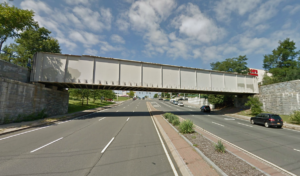
Infrastructure Week, Day 1: Bridges

How do we resolve a problem as widespread as nationally deficient bridge infrastructure?

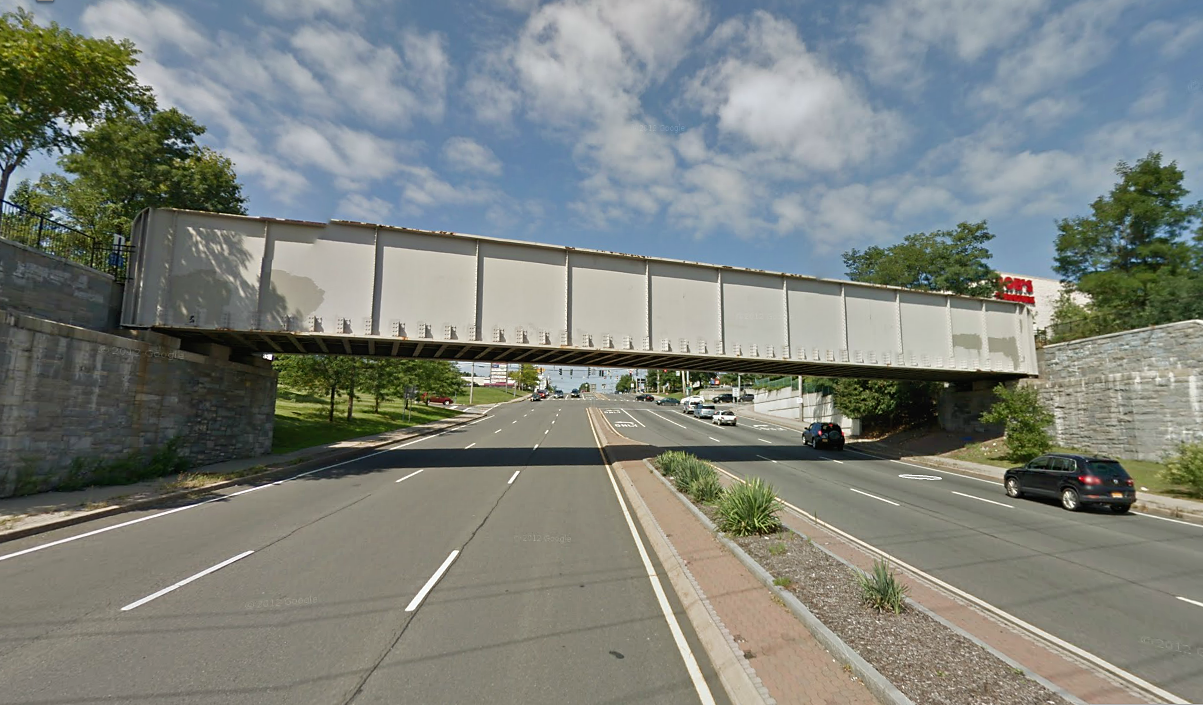
Year after year, America’s deteriorating infrastructure is so critically neglected that now, in 2019, we face a multi-billion-dollar backlog for the rehabilitation of bridges, a vital facet of the nation’s transportation infrastructure.

While the number of structurally deficient bridges in the United States is down significantly from years past, according to an Infrastructure Report Card provided by the American Society of Civil Engineers, around 188 million trips are taken every day across these deficient bridges. Rehabilitation needs for bridges are backlogged as much as $123 billion, an investment of over half of the funding already provided. These high repair and rehabilitation costs pose a nationwide challenge to state transportation agencies pursuing the construction of reliable infrastructure.

At KC Engineering and Land Surveying, P.C. (KC), structural engineering remains an integral part of our corporation’s contribution to providing safe, sufficient bridge infrastructure.

With projects like ‘Design and Construction of Emergency Repairs, Park Avenue Viaduct at 118th Street,’ ‘Replacement of Route 59 Bridge over MNRR,’ and ‘Greenkill Avenue Bridge Replacement,’ KC is continuously able to provide survey services, design assessment, and structural analysis for the replacement and rehabilitation of damaged, deficient, and extremely vital bridge infrastructure in various counties of New York State.


The Importance of Green Construction

The construction industry, responsible for about 4% of the world’s particulate emissions, is one of the major sources of pollution. Despite our best construction practices, air, water, and noise pollution continue to threaten our way of life.

Green building, a method of construction used to design sustainable, energy-efficient residential and commercial buildings, is now a growing trend and no longer a construction novelty. With pollution jeopardizing air quality, drinking water, and even putting our wildlife at risk, green building has come to the forefront of the construction industry as a largely marketable, thoughtful, and productive method of building.

A combination of sustainable processes and use of high-quality, low-impact materials contribute to the practice of green building. The Environmental Protection Agency (EPA) promotes several components of green building, including renewable energy use, waste reduction, and use of environmentally preferable building materials.

The popular concept of “reduce, reuse, recycle” is an example of an environmentally-friendly practice used during green construction, especially when it comes to waste reduction. As far as environmentally preferable materials, where concrete and steel are often impractical and expensive materials, timber is a relatively inexpensive, naturally renewable alternative with long-term sustainability capabilities.

Ultimately, green construction processes present a pollution-profuse industry with the opportunity to build smarter and sustainably, better control costs, and maintain the condition of the earth.


Earth Day 2019

April 22nd, 1970: Millions of concerned citizens rally in the streets to protest over a century’s worth of industrial development, which had caused a drastic rise in air pollution and massive decline in biodiversity. Ecological awareness mounts across the United States, urging President Nixon to make a change.

July 1970: President Nixon and the U.S. Congress create the Environmental Protection Agency (EPA) and enact laws like the Clean Water Act and the Endangered Species Act. The Clean Water Act establishes a simple structure for monitoring and maintaining pollution into U.S. waters while the Endangered Species Act, a response to biodiversity decline, protects the ecosystems and lives of endangered species.

Today, Earth Day spans the globe with an estimated one billion people in countries around the world participating in marches, tree plantings, and community service among other things.

According to Earth Day Network’s (EDN) website, the focus of Earth Day 2019 is on protecting our endangered species. And this responsibility lies with all of us. The EDN website identifies human activity as the number one cause of many species becoming endangered. But just as we have contributed to the risk to these species, we can all do something to slow the rate of extinction among many of these precious creatures.

EDN is raising awareness for Earth Day 2019 by leading several grassroots movements, encouraging people around the world to become educated on the causes of species endangerment and extinction. In addition, people are encouraged to stop using pesticides and herbicides; eat less meat; plant trees and gardens; and participate in cleanup days at local beaches, rivers, and streams.

To get involved or donate to the cause, visit: https://www.earthday.org/


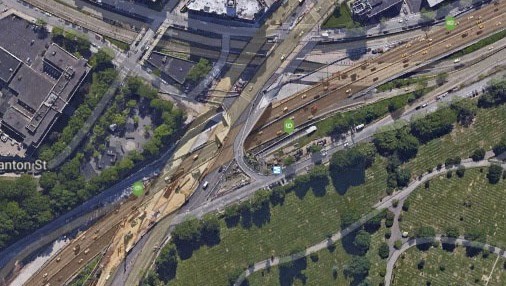
Rehabilitation of 7 Bridges in the Vicinity of the Van Wyck Expressway and Queens Boulevard

KC provided construction inspection services during the construction of Manton Street over Queens Boulevard deck replacement, Queens Boulevard over Main Street deck replacement, Queens Boulevard over Van Wyck Expressway deck replacement, Van Wyck Expressway over Main Street superstructure replacement, Hoover Avenue over Van Wyck Expressway painting, Van Wyck Expressway ramp over Van Wyck Expressway painting, and 82nd Avenue pedestrian bridge over Van Wyck Expressway painting.

Work also included new fixed and expansion bearings, new deck joints and reconstruction of abutments and piers, removal and replacement of the 86th Avenue pedestrian bridge, and construction of a weaving lane along the Northbound Van Wyck Expressway mainline between Hillside Avenue and Main Street.

Services performed included detailed inspections, onsite field testing of materials, field measurements and collection of data necessary to submit monthly and final estimates and progress reports, and preparation of record plans. All records were kept in accordance with the Manual of Uniform Record Keeping (MURK).