
National Engineer’s Week

This week is National Engineers Week!

This week-long event recognizes engineers as a central asset to our world and celebrates their “positive contributions to quality of life,” according to the National Society of Engineers.

Engineers created structures like the Hoover Dam, the Panama Canal, and even the Great Wall of China! Without engineers, these massive and impressive feats would have never come to be.

Founded by the National Society of Professional Engineers in 1951, National Engineers Week has coincided for over 50 years with the week of President George Washington’s birthday (February 22nd) to pay homage to the nation’s first engineer. Washington was introduced to engineering at an early age, often partaking in land surveying opportunities and ultimately going on to design a country estate on a plantation he’d inherited — Mount Vernon.

Each year, DiscoverE (http://www.discovere.org/), an organization focused on supporting and promoting growth of the engineering and technology communities, encourages children to explore the STEM community through interactive lessons, child-friendly activities, and involvement with their own local engineering communities.

Across the nation in cities like Port Jefferson, NY; Raleigh, NC; and Los Angeles, CA, DiscoverE hosts a series of workshops and presentations to promote the importance of engineering. Children are able to meet and speak with veteran engineers, participate in fun, educational activities, and learn about the global scale of engineered contributions.

For more information on upcoming STEM events sponsored by DiscoverE, visit http://www.discovere.org.


 

African-American Pioneers in Engineering You Should Know About

February is African-American History Month. As such, it is the perfect opportunity to highlight the engineering achievements of African-Americans who, although they may have contended with racism, societal inequality, and discrimination, worked hard to overcome obstacles and accomplished great things in the field of engineering.

  1. Walter Brathwaite, an American engineer who was born in Jamaica, was hired by Boeing in 1966. As Senior Engineer, he led the team that invented CAD systems for designing commercial Boeing aircraft. Over the years, Brathwaite rose through the ranks, eventually becoming President of Boeing Africa. When he retired in 2003, he was the highest ranking African-American executive of the company.
  2. Howard P. Grant graduated from the University of California, Berkeley, in 1948, making him the first African-American to graduate from the Berkeley College of Engineering. That same year, Grant also became the first known black member of the American Society of Civil Engineers. He subsequently became the first African-American civil engineer for the City and County of San Francisco and the second African-American civil engineer to be licensed by California. He worked in the San Francisco water department until 1984, and also held the position of president and treasurer of the California Society of Professional Engineers.
  3. George Biddle Kelley graduated from Cornell University's College of Civil Engineering in 1908. He went on to become the first African-American engineer registered in the state of New York. He was hired by the New York Engineering Department, where he worked on the Barge Canal, a collection of state waterways, during the 1920s.
  4. Elijah McCoy was born in Canada in 1844 to runaway slaves who had escaped Kentucky thought the Underground Railroad. At the age of 15, he moved to Edinburgh, Scotland for an apprenticeship. There he became certified in mechanical engineering. Upon leaving Scotland, he moved to Michigan, where his family was now living. After being unable to find engineering work in Michigan because of his race, he found work as a fireman with the Michigan Central Railroad. Part of his duties included oiling the steam engine parts. Soon McCoy had invented an automatic engine lubricator, which meant that trains were no longer required to stop for lubrication. The lubrication could now occur while the train was moving. As news of the invention spread, many inventors attempted to create their own version of the automatic lubricator. However, it was soon discovered that McCoy’s invention was superior. It is said that railway engineers began requested “the real McCoy” lubricator. McCoy filed a total of almost 60 patents, including designs for an ironing board, a lawn sprinkler, and other machines.


January 2022 Company Newsletter

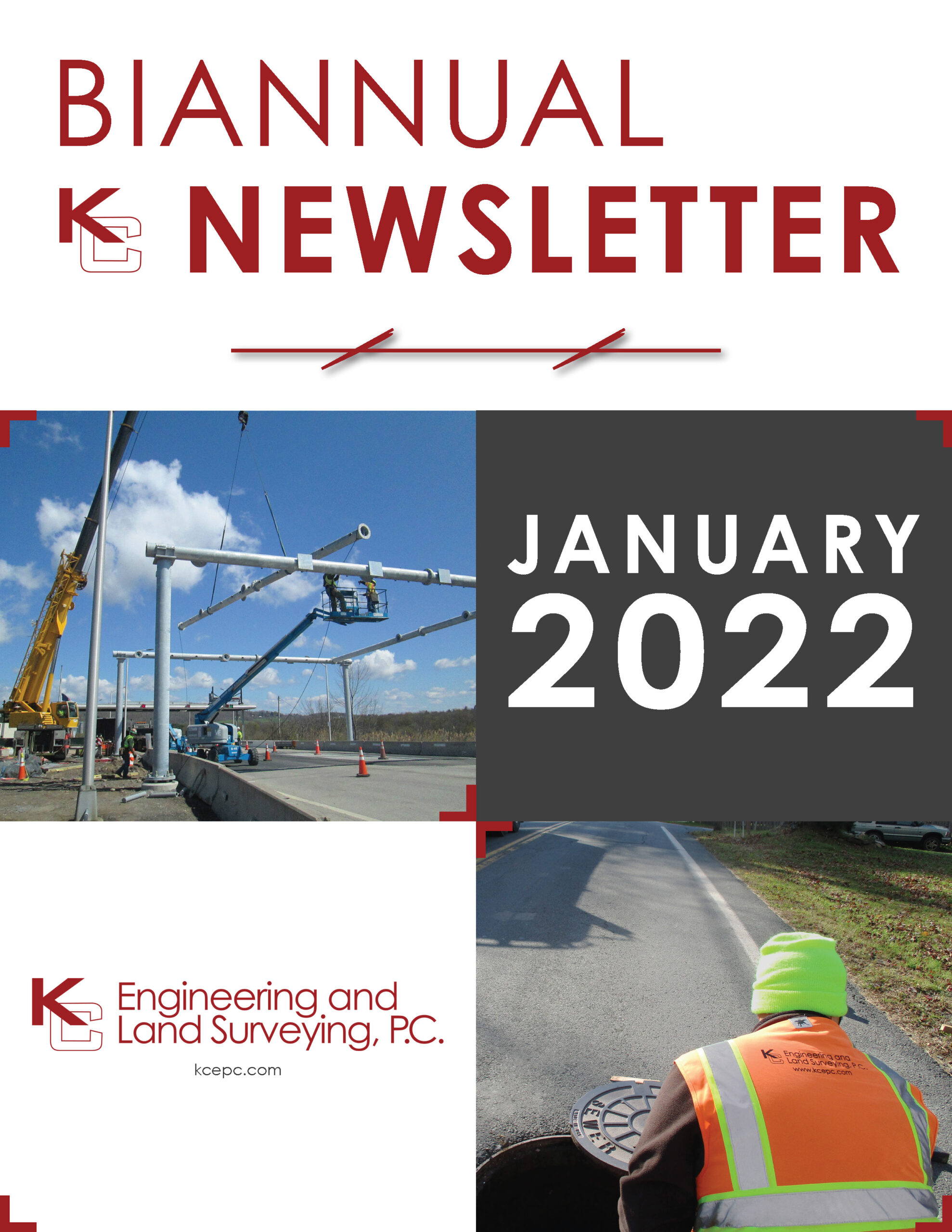
KC's January Newsletter includes an expanded employee milestones section, a selection of favorite projects from several KC employees, details on KC projects that have recently won industry awards, a feature regarding changes to the website, new projects / shortlists, and more.

Download KC’s Company Newsletter – January 2022 edition to keep up with KC’s latest news!


What is Tissue Engineering?

According to the National Institute of Biomedical Imaging and Bioengineering (NIBIB), “tissue engineering evolved from the field of biomaterials development and refers to the practice of combining scaffolds, cells, and biologically active molecules into functional tissues.” Bioengineer Yuan-Chen Fung was the first person who established the term ”tissue engineering” in 1985 while presenting a proposal to the National Science Foundation (NSF). Mr. Fung’s goal with the proposal was to win funding for the Center for the Engineering of Living Tissue at the University of California, San Diego.

Tissue engineering was created from the biomedical engineering discipline and is a method that has the ability to produce tissues that are used to restore and improve certain human body functions. Even though tissue engineering was only established as a term in the late 1980s, it has become an important technology in the medical field due to being created out of living tissues instead of man-made materials. Artificial bones, cartilage, and even skin are some examples of tissue engineering approved by the United States Food and Drug Administration (FDA) that are currently used in the medical field.

As technology advances, more research is conducted and experiments are developed to continue repairing and/or replacing certain human organs. The main goal of tissue engineering is to replace damaged tissues and organs with living and functioning artificial ones. Thanks to the advances in technology and tissue engineering, people with liver, kidney, and heart issues are able to have these organs repaired and/or replaced and continue living a normal life.

To learn more about tissue engineering, please visit: https://www.nibib.nih.gov/science-education/science-topics/tissue-engineering-and-regenerative-medicine


National Static Electricity Day

National Static Electricity Day is celebrated every year on January 9th.

Static electricity is defined by Library of Congress as “an imbalance between negative and positive charges in objects.” This type of reaction can occur to any of us because we can see, feel, and hear its reaction. Static electricity is harmless and can occur in more than just one form of static shock, such as rubbing a balloon against your clothes and sticking it on the walls or even on your hair to make your hair raise.

The first person to speak about static electricity was Thales of Miletus, a Greek philosopher, when he noticed dust was sticking to his ambers after he rubbed them; but it wasn’t until many years later that the term “electricity” was established, and that’s when humankind started to understand and research more about the concept of static electricity. Now, National Static Electricity Day is celebrated because it has become an essential aspect of and shaped our everyday lives in many positive ways. For example, thanks to static electricity and electric engineering developments, factories’ air pollution can be managed.

Here are some fun facts about static electricity:

  • Lightning is known to be a form of static electricity due to electric charge exchange between clouds;
  • Static electricity could be the future source to solve our energy problems; and
  • Photocopy machines use static electricity to place ink on paper.

If you want to learn more about science and static electricity, please visit: https://www.sciencemadesimple.com/static.html