Infrastructure Week, Day 1: Bridges

How do we resolve a problem as widespread as nationally deficient bridge infrastructure?

Year after year, America’s deteriorating infrastructure is so critically neglected that now, in 2020, we face a multi-billion-dollar backlog for the rehabilitation of bridges, a vital facet of the nation’s transportation infrastructure.

While the number of structurally deficient bridges in the United States is down significantly from years past, according to an Infrastructure Report Card provided by the American Society of Civil Engineers, around 188 million trips are taken every day across these deficient bridges. Rehabilitation needs for bridges are backlogged as much as $123 billion, an investment of over half of the funding already provided. These high repair and rehabilitation costs pose a nationwide challenge to state transportation agencies pursuing the construction of reliable infrastructure.

At KC Engineering and Land Surveying, P.C. (KC), structural engineering remains an integral part of our corporation’s contribution to providing safe, sufficient bridge infrastructure.

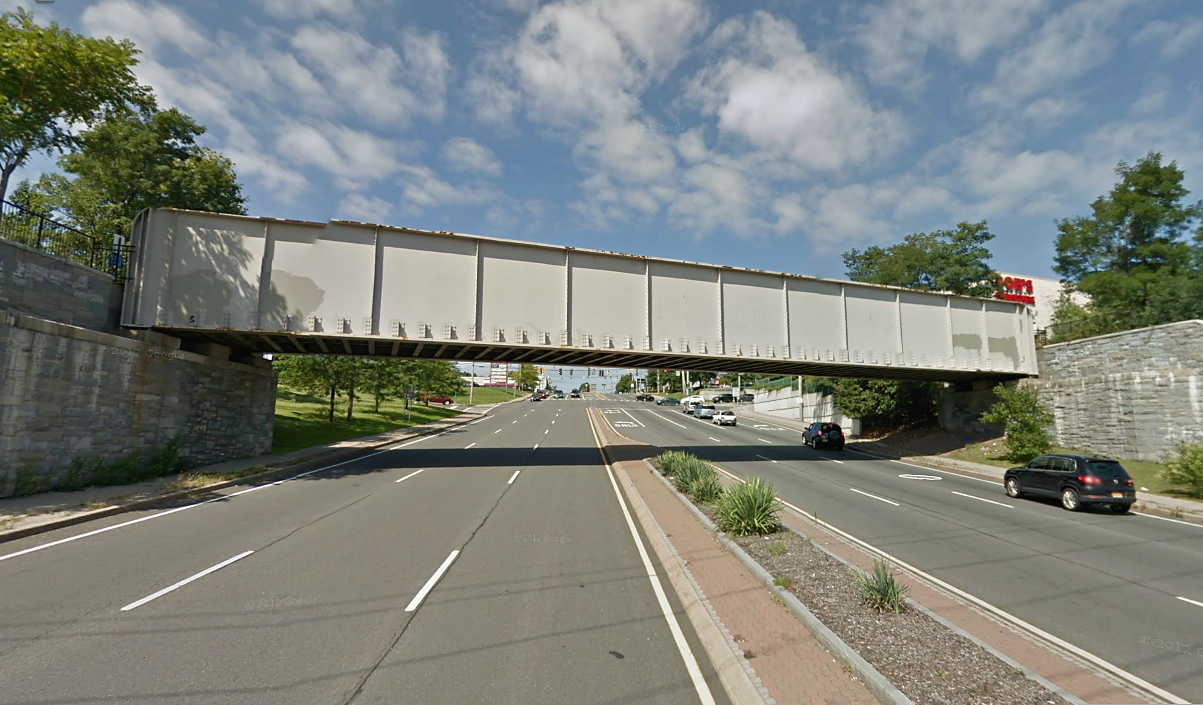
With projects like Region 8 Ulster County Design-Build Bridge Replacements, Park Avenue Viaduct at 118th Street, Replacement of Route 59 Bridge over MNRR, and Greenkill Avenue Bridge Replacement, KC is continuously able to provide survey services, design assessment, and structural analysis for the replacement and rehabilitation of damaged, deficient, and extremely vital bridge infrastructure in various counties of New York State.

Remembering the Twin Towers: Engineering Facts about the World Trade Center

KC wishes to commemorate and honor the great engineering feats of the Twin Towers and to celebrate and look ahead to the new feats accomplished with the design and construction of the new World Trade Center. Our thoughts and prayers go out to all victims, survivors, and heroes of the September 11, 2001 attack as we look at the engineering integrity of the World Trade Center.

Below are noteworthy engineering facts about the past, present, and future of the World Trade Center.

The Past

  • Development of the original World Trade Center began in 1946. “The original proposal,” according to the WTC Memorial and Museum, “was for only one 70-story building.” However, by the final iteration of the towers’ design, the structures doubled in quantity and grew to contain 110 stories each.
  • Design of the towers began in the mid-1960s and construction began in the early 1970s.
  • Leslie E. Robertson, an American engineer who also worked on the Shanghai World Financial Center and the Bank of China Tower, was the lead structural engineer of the towers.
  • The towers contained 200,000 tons of steel, weighed 1.5 million tons, had 43,600 windows, and 239 elevators.
  • Construction of the towers ended in 1971.
  • The total construction cost of the towers was $900M.

The Present

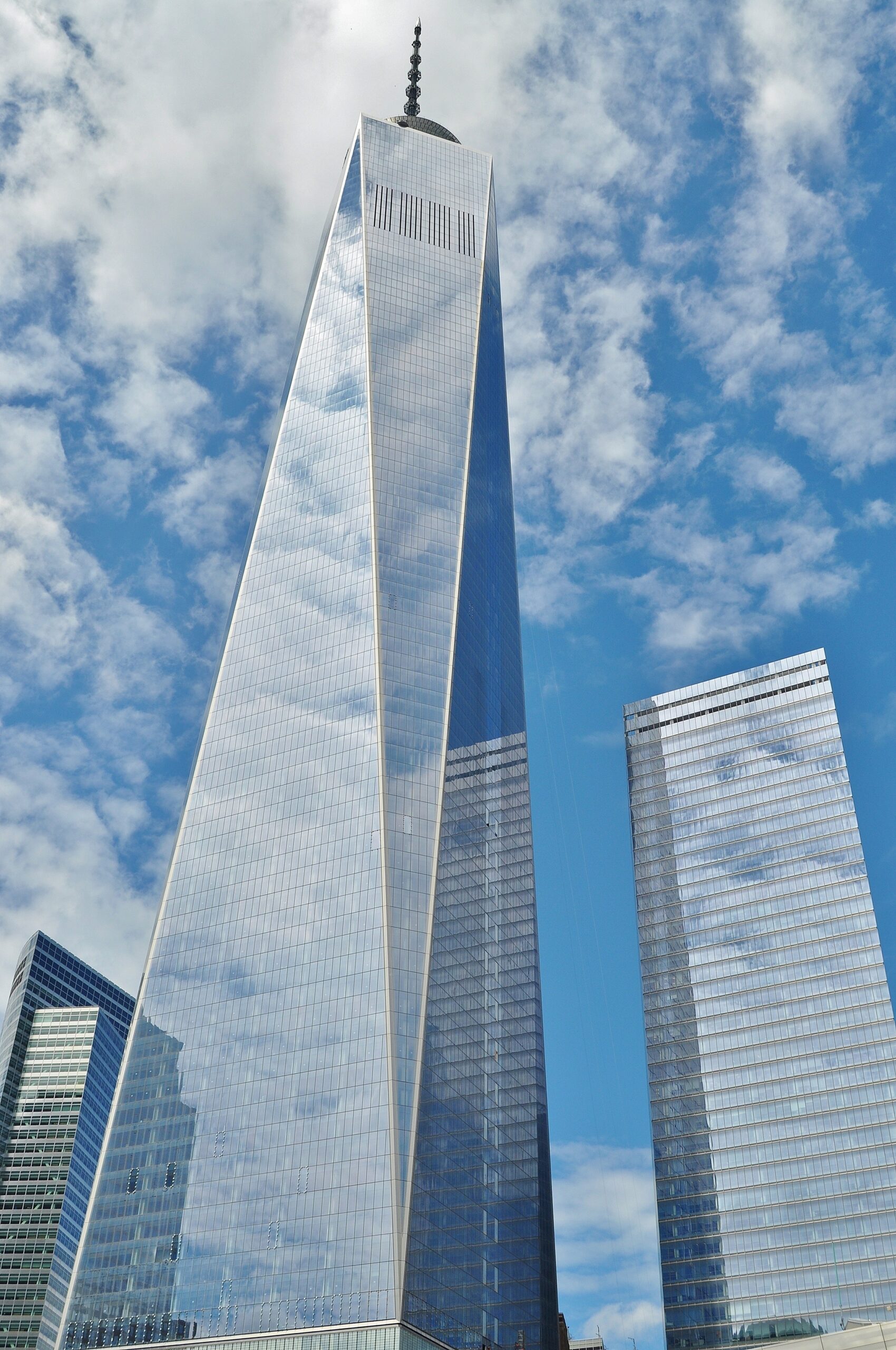
  • Design of One World Trade Center began in 2005. Formerly referred to as the Freedom Tower, One World Trade Center is the building’s ultimate name as decided in 2009 and was designed by architect David Childs from Skidmore, Owings and Merrill, LLP, the original architecture firm who proposed the towers back in 1958.
  • Construction of One World Trade Center completed on May 10th, 2013 and opened to the public on November 3rd, 2014.
  • One World Trade Center is 1,776 feet tall, which, according to Reader’s Digest, is “a direct reference to the year the Declaration of Independence was signed.”
  • Reader’s Digest also reports that One World Trade Center “is one of the safest, technologically advanced, and environmentally sensitive [buildings] in the world,” quoting Port Authority design consultant Eduardo del Valle who described its makeup: “[The tower] has a concrete core, with very thick concrete walls […] The podium has some heft blast-resistant walls at the base.”
  • The total construction cost of One World Trade Center was roughly $4B.
  • The structure is now home to companies such as The Port Authority of NY & NJ, Mediacom, BMI, The New York Academy of Sciences, Condé Nast, and many more.

The Future

  • The World Trade Center complex is the ultimate hub of life—it contains not only office space and the 9/11 Memorial and Museum, but over half a million square feet of new retail, is surrounded by over 80 restaurants, and hosts a wide array of events year-round. The complex only continues to grow with Three World Trade Center open for business as of June 2018.
  • Beyond the recreational attractions and business offerings, the design of the new towers is said to be setting a new standard in design through a masterful combination of green architecture, heightened safety measures, and historic significance. And with this historic significance, which has made the complex some of the most internationally-recognized buildings in NYC, perhaps the World Trade Center will make a true stamp upon the structural engineering landscape. Perhaps the ways in which the towers exceed NYC safety and environmental standards will, in fact, set new, even higher standards for NYC buildings and beyond.


What is Work Zone Traffic Control?

When construction takes place on or near roadways, it can result in traffic delays and compromised safety of construction workers, motorists, and pedestrians. As a result of roadway construction, certain measures are enacted to facilitate a safe work area for workers, maintain and protect the flow of traffic, and complete necessary work on schedule.

Work zone traffic control (WZTC) was created with these factors in mind, providing construction workers with the knowledge they need to maintain a safe work environment while ensuring an organized flow of traffic. WZTC protocols seek to mitigate the effects of construction on those directly affected by factors such as lane closures or detours.

Motorists should be alert to changing traffic patterns and possible work zones that may crop up along the road.

The typical WZTC area consists of four components:

1. The advance warning area is the point where motorists are alerted to upcoming road work, usually through the use of road signs, electronic signboards, and flags.

2. The transition area is the area motorists are guided to transition out of their normal traffic pattern to the new, temporary traffic detour. This can be done with the use of flaggers, traffic cones, and signs.

3. The activity area is where the actual road work is being conducted.

4. The termination area is the point where traffic is allowed to return to its normal pattern.

While every municipality can mandate or adopt their own WZTC policies, they must remain consistent with the Manual on Uniform Traffic Control Devices (MUTCD), set in place as a result of the New York State Vehicle and Traffic Law.

At KC, our field staff are well-versed in WZTC operations, and regularly apply said knowledge when providing a variety of services to our clients.


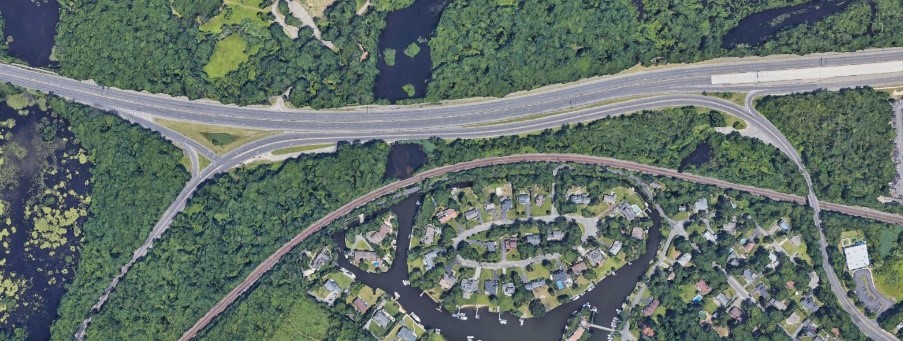
Sunrise Highway (NY-27) Oakdale Merge Planning / Feasibility Study

As part of a Regional Design Services Agreement (RDSA), the project served to identify, evaluate, and document existing conditions and deficiencies and propose feasible conceptual alternatives to mitigate said deficiencies.

The project site experienced significant congestion and delays during peak travel periods, as motorists encountered recurring bottleneck in the eastbound and westbound approaches to Oakdale Merge.

The feasibility study described the highway facility and its role in the local and regional surface transportation network, defined existing operational issues and deficiencies, established the need for a capital construction project to reduce the issues, recommended and assessed various alternatives, and assessed the impacts of each proposed alternative.

The scope of work also included review of environmental impacts due to the site’s proximity to New York State of Department of Conservation (NYSDEC) wetlands and the Connetquot River State Park. The project required continuous coordination with the New York State Parks Department, NYSDEC, Suffolk County Department of Public Works (DPW), and the Town of Islip.

KC was responsible for developing detailed cost estimates for the alternatives identified in the feasibility study and performing HCS traffic analyses.


South Street Pump Station Emergency Generator Replacement Project

The Village of Suffern owns and operates a pump station, located on South Street, as part of the sanitary sewer collection system. This pump station is the largest within the collection system and serves as the primary pump station. The pump station is located within the floodway of the floodplain, and received significant damage during Hurricane Irene, which also had a direct impact on the emergency generator.

KC was responsible for providing engineering consulting services for the project, which included performing site and existing condition investigations and preparing design documents, specifications, and the engineering cost estimate. KC also provided bid phase services, including preparation of bid and contract documents.

The scope of construction work included removal of the existing generator, all associated accessories, and the transfer switch; installation of a 150-kilowatt (kW) generator and automatic transfer switch; reconnection of the new generator to the existing control panels; and installation of all wiring, conduit, and appurtenances to and from the new generator to provide a complete and functional backup power generation system.